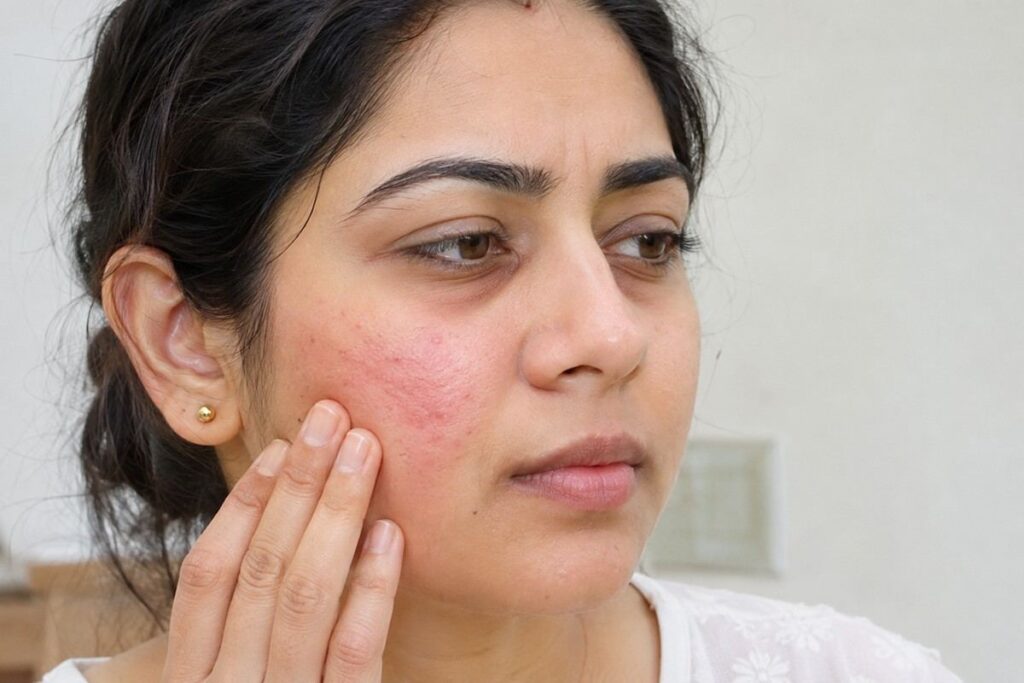
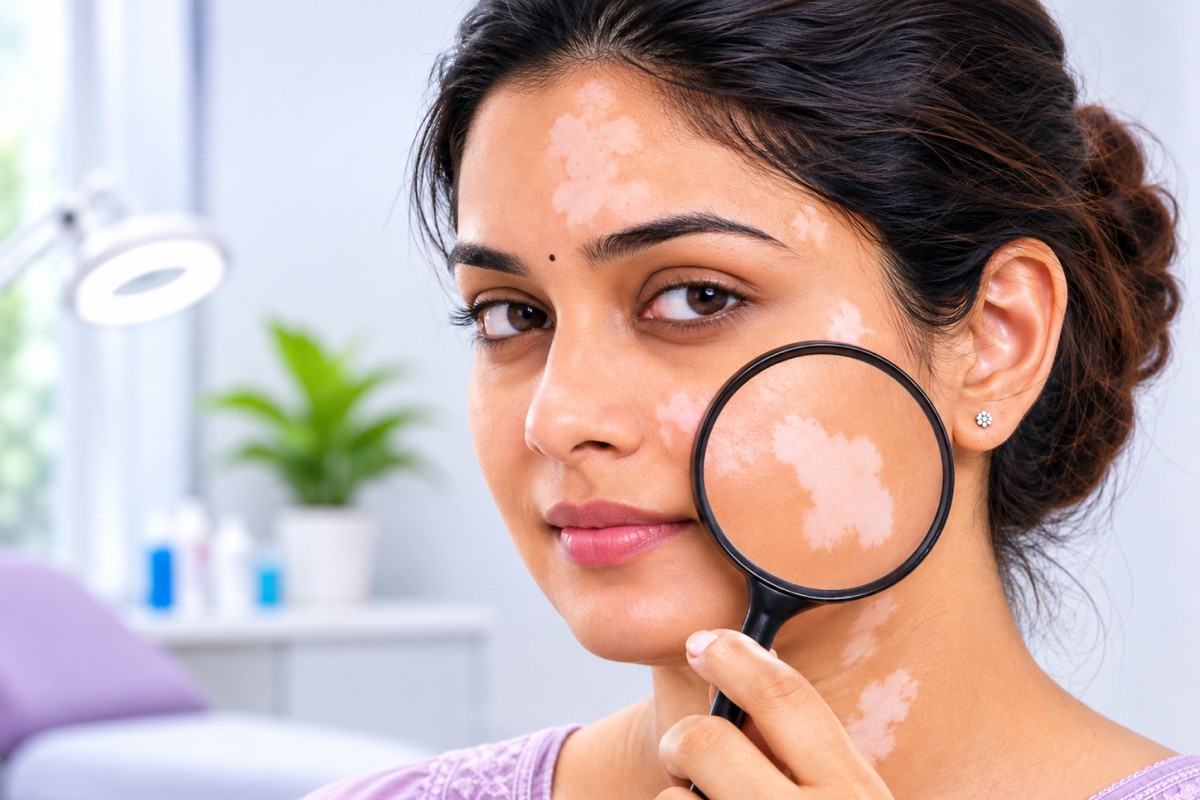

Vitiligo surgery moves pigment-producing cells from normal skin into white patches that have stopped changing. It is not a first-line treatment and does not suit everyone.
Who is a suitable candidate for vitiligo surgery? A suitable candidate usually has stable vitiligo: no new patches, no enlarging patches and no new patches at injury sites for a period set by the dermatologist, often a year. Patches that have not responded to medicines or phototherapy, and segmental or localised vitiligo, tend to suit surgery best.
What Is Vitiligo and Why Does It Develop?
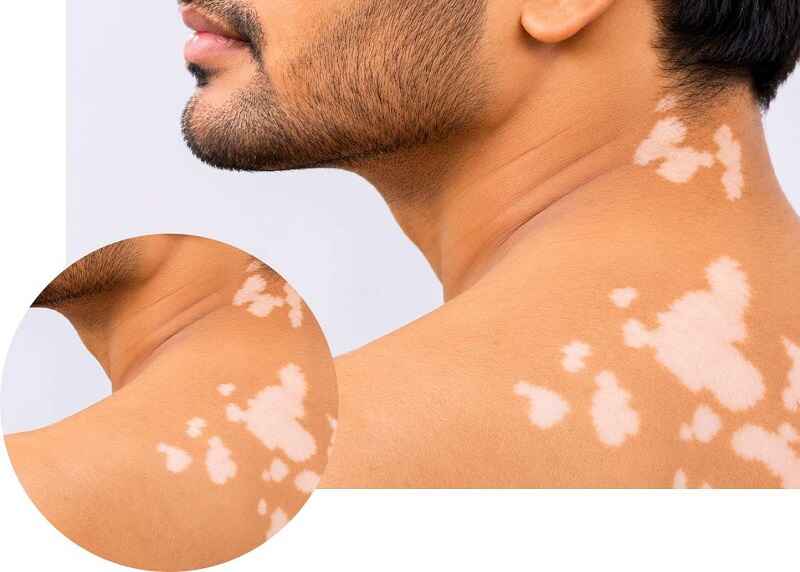
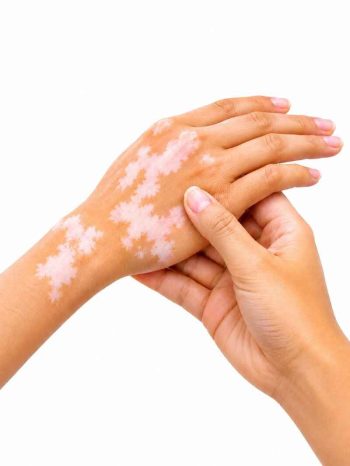
Vitiligo is a long-term, non-contagious condition in which skin patches turn white. It affects about 1 in 100 people. The immune system is thought to attack melanocytes, the cells that make the pigment melanin.
Non-segmental vitiligo, the commonest type, appears on both sides of the body and may spread for years. Segmental vitiligo affects one side and usually stops spreading early. The face often responds well; fingertips and lips are harder to treat.
What Is Vitiligo Surgery?
Creams and phototherapy try to reactivate melanocytes left in a patch. When none remain, surgery brings healthy melanocytes from a donor area, usually the thigh or buttock.
UK dermatology guidelines list grafting as an option for stable vitiligo that has not responded to other treatments. At Skin & Hair Surgery, surgery sits alongside topical medicines and NB-UVB phototherapy within our vitiligo treatment options in Pune.
What Are the Different Surgical Treatments for Vitiligo?
Techniques are either tissue grafts, which move small pieces of skin, or cellular grafts, which move a suspension of separated cells.
Punch Grafting
Tiny 2 mm skin cylinders are set into the patch, and pigment spreads outwards from each. It suits small-to-medium patches.
Suction Blister Grafting
Suction raises blisters on donor skin, and the thin blister roofs are placed on the prepared patch. It is often chosen for the face and lips.
Split-Thickness Skin Grafting
A very thin sheet of top skin is shaved from the donor site and laid over the patch. It suits larger patches on the arms, legs or trunk.
Non-Cultured Epidermal Cell Suspension Transplantation
Donor skin is treated with an enzyme to separate its cells, which are spread over the prepared patch. A small donor area can treat a much larger patch.
Melanocyte-Keratinocyte Transplantation
MKTP transfers both pigment cells and surface skin cells, usually as a one-to-three-hour day-care procedure. It is widely used in India.
| Technique | Usually suited to | Key advantage | Key limitation |
|---|---|---|---|
| Punch grafting | Small–medium patches | Simple, widely available | Cobblestone surface, colour mismatch |
| Suction blister grafting | Small patches, face, lips | Good colour match | Slow, small areas only |
| Split-thickness grafting | Larger patches on covered areas | More area per sitting | Immobilisation, darker graft |
| Cell suspension / MKTP | Larger or visible areas | Small donor treats large area | Specialised set-up, higher cost |
Who May Be a Suitable Candidate for Vitiligo Surgery?
Suitability is decided only after examination. Doctors look for:
● Stable vitiligo and a stable treated patch: no new, enlarging or injury-triggered patches. There is no universal cut-off; Indian guidelines suggest one year, while studies range from 3 months to 4 years.
● Localised or segmental vitiligo, which generally responds better.
● Patches that have not improved with adequate medical treatment.
● Suitable size, location and skin health, plus realistic expectations.
In doubtful cases, a small test graft may be done first.
Wondering whether surgery suits your patches? Book an assessment at Skin & Hair Surgery to discuss whether surgery, medical treatment or both may be appropriate.
Who May Not Be Suitable for Vitiligo Surgery?
● Active, spreading or changing vitiligo
● Uncontrolled skin conditions near treatment sites
● Keloid tendency or conditions affecting healing
● Children, whose disease course is less predictable
Active vitiligo means surgery is postponed, not ruled out.
How Is Vitiligo Surgery Performed?
The exact steps depend on the technique chosen.
Initial Dermatological Consultation
Your history, patch stability and previous treatment are reviewed, often with a Wood’s lamp examination.
Assessment and Selection of Surgical Technique
Patch size, site and type guide the technique; risks are discussed before consent.
Preparation of the Treatment Area
Local anaesthesia is given, and the patch’s top layer is removed by dermabrasion or laser.
The Surgical Procedure
Grafts or cells are placed on the patch, usually as day-care surgery.
Dressing and Post-Procedure Instructions
Both sites are dressed, with instructions for care and follow-up.
What Does Recovery After Vitiligo Surgery Involve?
Initial Wound Healing
Dressings usually stay on for about a week; treated skin may look pink afterwards.
Dressing and Skin Care
Keep dressings dry and intact; use sun protection after healing.
Activity Restrictions and Precautions
Avoid movement, rubbing, heavy exercise and swimming until advised.
When Does Repigmentation Become Visible?
Wound healing takes days to weeks; repigmentation takes months. After MKTP, colour often appears at 4–8 weeks and keeps improving for 4–6 months.
Follow-Up and Additional Treatment
Phototherapy often helps pigment spread; a second session may follow after about six months.
What Results Can Patients Expect?
A 2021 review of 117 studies (8,776 patients) found that after one session, about 53% achieved over 90% repigmentation and 81% over 50%. These are averages, not individual predictions, and vitiligo can still return.
What Are the Possible Risks and Complications?
● Infection at the donor or treated site
● Scarring, including raised or keloid scars
● Uneven pigmentation or a cobblestone surface
● Incomplete repigmentation
● Colour mismatch with surrounding skin
● Graft failure
● Koebner phenomenon: new vitiligo triggered by skin injury, including at the donor site
Frequently Asked Questions About Vitiligo Surgery
No. Surgery is generally considered only for stable vitiligo that has not responded well to medical treatment. People with spreading vitiligo, new patches or healing problems may not be suitable. A dermatologist decides after examining your patches and history.
There is no single rule. Indian dermatology guidelines suggest about one year without new or enlarging patches, while other sources use 6–12 months. Your dermatologist considers overall stability and the stability of the treated patch before advising surgery.
The procedure is done under local anaesthesia, so most people feel little pain during it. Afterwards, the treated and donor sites may feel sore for a few days. This is usually manageable with simple painkillers your doctor recommends.
Initial wound healing usually takes about one to two weeks, with dressings often kept for around a week. Repigmentation is slower and continues over several months. Your dermatologist will advise when to resume work and exercise.
Pigment returns gradually. After cell-suspension procedures such as MKTP, colour often appears at four to eight weeks and develops over four to six months. Timing varies with the technique, the body site and each person’s response.
Yes. Surgery restores pigment in treated patches but does not cure vitiligo. Patches can lose colour again, or new ones can appear, especially in non-segmental vitiligo. Regular follow-up and advised medical treatment help manage this.
Neither is better for everyone. Phototherapy is usually tried first and suits active or widespread vitiligo. Surgery is considered for stable patches that have not responded. The two are often combined, with phototherapy after surgery supporting pigment spread.
The face, neck and segmental patches generally respond well. Fingertips, hands, feet, lips, eyelids, genitals and skin over joints or bony areas give more variable results. Your dermatologist will explain how your patch locations may affect outcomes.
Possible side effects include infection, scarring, a bumpy surface, colour mismatch, incomplete repigmentation, graft failure and new patches triggered by skin injury. Risk depends on the technique and the individual, and should be discussed before consent.
Usually not. When vitiligo is spreading, grafts are less likely to hold pigment, and surgery may trigger new patches. Active vitiligo is generally treated first with medicines or phototherapy, and surgery is reconsidered once it is stable.
Consult a Dermatologist to Understand Your Vitiligo Treatment Options
Surgery can help selected patients with stable patches, but suitability depends on careful assessment. Also read about our care for other pigmentation concerns.
Book a dermatology consultation at Skin & Hair Surgery, Pune.
Our dermatologists, including Dr. Pradeep Kumari, can assess your skin at our Viman Nagar, Kothrud or Aundh clinics.