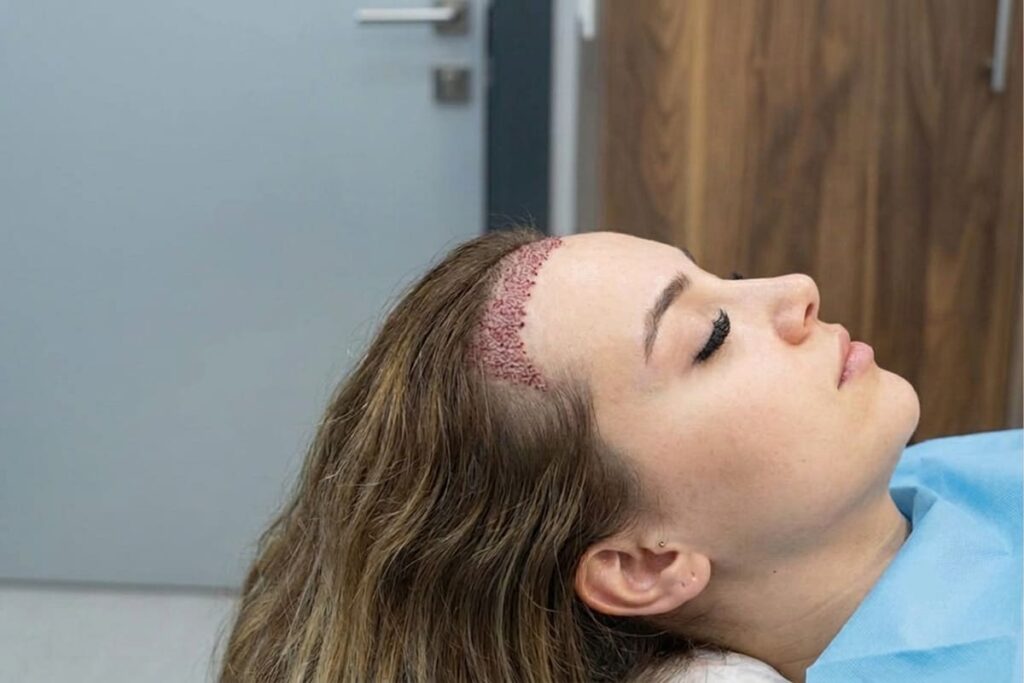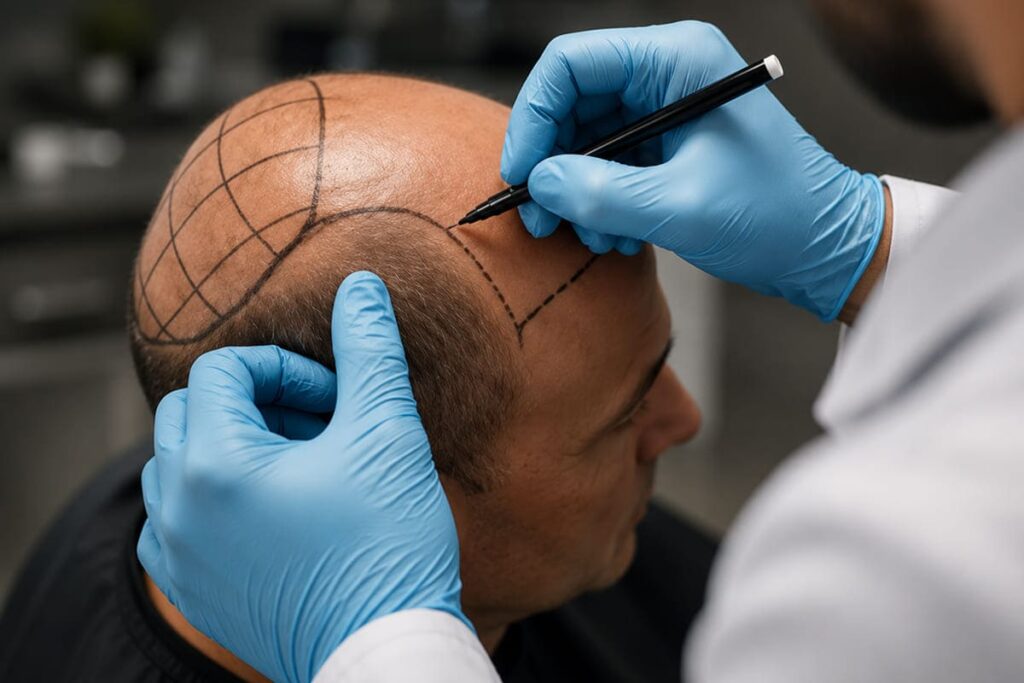


A receding hairline or thinning crown often prompts one question: “Should I get a hair transplant?” Hair loss alone, however, does not mean surgery is the right answer.
Hair transplant candidacy is a dermatologist’s judgement on whether surgery is likely to help you safely and with lasting results. To decide, the dermatologist looks at the cause and progression of your hair loss, your donor hair, scalp health, general health and expectations. There is no single eligibility rule; two people with similar bald patches can receive very different advice.
Below, we explain each check, the tests involved, and why some patients are advised to wait or begin with hair loss treatment first.
Who Is a Good Candidate for a Hair Transplant?
Both men and women can be suitable for a hair transplant. A good candidate usually has:
● A diagnosis that responds to transplantation, most commonly pattern hair loss (androgenetic alopecia)
● Enough healthy, stable hair at the back and sides of the scalp to move
● A hair loss pattern that is predictable enough to plan around
● A healthy scalp, or a scalp condition that is well controlled
● General health that makes a minor surgical procedure reasonably safe
● Realistic expectations about coverage and density
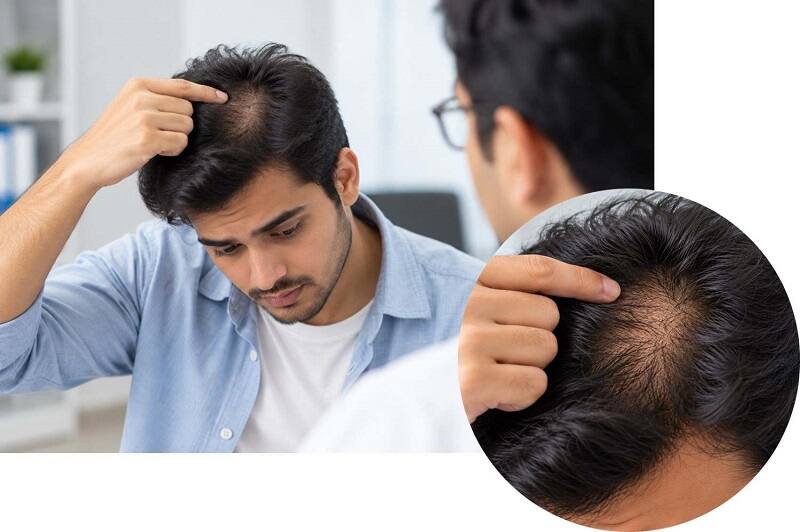
The American Academy of Dermatology sums up the basics as two things: enough healthy hair to move, and a thinning area able to grow it. Still, no single factor guarantees hair transplant suitability; a dermatologist weighs them together.
What Does a Dermatologist Assess Before Recommending a Hair Transplant?
1. The Cause of Hair Loss
Diagnosis comes first. Pattern hair loss is the condition most often treated with transplantation, but several other conditions can look similar:
● Telogen effluvium: temporary shedding after illness, stress, childbirth or crash dieting
● Alopecia areata: autoimmune, patchy hair loss
● Scarring alopecias: such as lichen planopilaris, where inflammation destroys follicles
● Traction alopecia: from tight hairstyles over time
● Nutritional, thyroid or hormonal causes: which may need correction rather than surgery
Moving hair into an area with an untreated or active condition can waste grafts, so the cause is confirmed first.
2. The Pattern and Progression of Hair Loss
The dermatologist notes where you are losing hair, for how long and how quickly. Men’s pattern hair loss is often staged on the Norwood scale; women’s on the Ludwig or Sinclair scale.
A stable, defined pattern is easier to plan for. If native hair around a transplant keeps thinning, the transplanted hair can look isolated. Rapid or unpredictable shedding may need investigation, treatment or monitoring first.
3. Donor Area Density and Hair Quality
The donor area is the back and sides of the scalp. Hair here is usually less affected by the hormonal process behind pattern baldness, so it tends to keep growing after it is moved. The dermatologist checks:
● Hair density: hairs and follicular units per area
● Hair calibre: thicker hair gives more coverage per graft
● Texture and colour contrast with the scalp
● Miniaturisation: thinning hairs here may mean the donor zone itself is unstable
● Scalp laxity and scars from injury or earlier procedures
Donor hair is limited. Harvested follicles do not regrow, so the surgeon must balance today’s needs against what you may need years later if hair loss continues.
4. Scalp Health and Underlying Conditions
Grafts need a healthy scalp to survive and heal. The dermatologist looks for infection, folliculitis, inflammation, scaling from seborrheic dermatitis or psoriasis, and signs of scarring.
Most of these can be treated first and surgery reconsidered. Active scarring alopecias are different: grafts generally do poorly while the disease is active, so surgery is deferred until it has been controlled and quiet for a sustained period.
5. Age and Future Hair Loss
Age alone does not decide candidacy. What matters more is how predictable your future hair loss is.
Early-onset hair loss can progress further, and in some young patients donor stability is hard to predict. A low, dense hairline placed in your early twenties may look out of place later if the hair behind it recedes. Many surgeons therefore prefer medical treatment and observation while pattern hair loss is still evolving. This is a clinical judgement, not a fixed age cut-off.
6. Medical History, Medications and Healing Factors
A transplant is surgery, usually under local anaesthesia. The team will ask about:
● Diabetes, blood pressure, heart disease or bleeding disorders
● Medicines and supplements, especially blood thinners, and allergies
● Previous hair loss treatments and scalp procedures
● Smoking, which can impair healing and graft survival
Poorly controlled conditions may need attention first. Precautions are individualised, not taken from a fixed checklist.
7. Hair Transplant Candidacy in Women
Women can be candidates in selected situations: female pattern hair loss with a stable donor area, traction-related hairline loss, or hair loss after injury.
Female pattern hair loss is often diffuse, spreading across the top of the scalp and sometimes into the donor area. Widespread miniaturisation can leave little stable hair to move. Thyroid, iron, hormonal and postpartum causes also need to be ruled out. Not every woman with thinning hair is suitable, so a thorough work-up comes first.
8. Expectations, Desired Density and Long-Term Planning
A transplant redistributes hair you already have. It does not create new follicles or stop pattern hair loss in the hair that was not moved.
A fuller look is often achievable; teenage density usually is not. A good plan sets out realistic coverage, where grafts are prioritised (often the front), whether another session may be needed, and how ongoing loss will be managed.
Not sure if you’re a candidate? Suitability depends on your own findings. A hair transplant consultation can check your hair loss, donor area and scalp before you decide.
What Tests or Examinations May Be Needed Before a Hair Transplant?
There is no fixed test panel. Some tests look for the cause of hair loss; others check that surgery is safe for you. Depending on your history, the assessment may include:
● A detailed hair loss, medical and family history
● Examination of the thinning and donor areas
● Trichoscopy: magnified scalp examination for miniaturisation, inflammation or scarring
● A hair-pull test if active shedding is suspected
● Blood tests when a cause such as a thyroid problem or low iron is suspected
● A scalp biopsy in selected unclear or scarring cases
● Pre-operative investigations based on your health and the planned procedure

When Might a Dermatologist Recommend Delaying or Avoiding a Hair Transplant?
A dermatologist may advise postponing surgery, or another approach, if:
● The cause of hair loss is not yet diagnosed
● There is active scalp infection or inflammation
● Hair loss is rapid or unstable
● Donor hair is insufficient or itself thinning
● A scarring alopecia is active
● A medical condition or medicine raises surgical risk
● Expectations cannot realistically be met
Often, “not now” does not mean “never”. Treating the underlying problem or stabilising hair loss can make surgery an option later.
Is Medical Treatment Needed Before a Hair Transplant?
Not always, but it often helps. In pattern hair loss, medical treatment can slow thinning and protect native hair around a future transplant. The American Academy of Dermatology notes that hair loss can continue after a transplant and medicine may be recommended to help keep results.
Depending on your diagnosis, a dermatologist may discuss topical or oral medicines, or procedure-based options such as PRP hair treatment or GFC therapy. Responses vary and none works for everyone. Some medicines have side effects or are unsuitable in pregnancy, so use them only on medical advice. For what is established versus emerging, see our guide to new hair loss treatments in 2026.
What Should You Ask During a Hair Transplant Consultation?
Clear questions help you make an informed decision:
● What is causing my hair loss?
● Am I a suitable candidate for surgery now, or should I wait?
● Is my donor area sufficient, and is it stable?
● Should my hair loss be stabilised first?
● What density and coverage can realistically be achieved?
● Could I need further treatment or another session in future?
● What are the risks and alternatives in my case?
Answers should be specific to you. Be cautious if surgery is quoted from photos alone, if a clinic promises “unlimited” grafts or full density, or if you feel pushed to book quickly. It also helps to know who will perform your procedure, such as our hair transplant surgeon Dr.Pradeep Kumari.
Important Reads
● New Hair-Loss Treatments in 2026 – Which newer options have real evidence and which are still experimental.
● Stem Cell Therapy for Hair Loss vs PRP – How two non-surgical options differ and who they may suit.
● FUE Hair Transplant in Pune – How the FUE technique works once you are found suitable for surgery.
Frequently Asked Questions About Hair Transplant Candidacy
Typically, someone with a confirmed diagnosis that responds to surgery, usually pattern hair loss, plus enough healthy and stable donor hair at the back and sides of the scalp. Good general health, a healthy scalp and realistic expectations matter too. Because these factors interact, suitability can only be confirmed through an in-person assessment.
The dermatologist takes a detailed history, examines the scalp and donor area, often uses trichoscopy, and orders tests only where needed. They then weigh the diagnosis, progression, donor supply, scalp health, medical risk and your goals before advising whether surgery, medical treatment or a combination is most appropriate.
There is no universal minimum age. Instead, dermatologists look at how predictable future hair loss is. In younger patients whose pattern hair loss is still evolving, many surgeons prefer to start with medical treatment and observe, because early surgery can create planning problems if hair loss later spreads.
Sometimes, but it depends on the cause and speed of the loss. Rapid or unexplained shedding usually needs diagnosis and treatment first. In pattern hair loss, surgery may still be possible alongside medical treatment, with a plan that accounts for likely future thinning around the transplanted area.
The dermatologist examines the back and sides of the scalp for hair density, hair thickness, texture, colour contrast and scalp laxity. Magnified examination helps check for miniaturisation, which can indicate that the donor zone itself is thinning. Scars from previous procedures are also noted, as they affect how much hair can be safely harvested.
Yes, in selected cases. Women with female pattern hair loss and a stable donor area, traction-related hairline loss, or hair loss after injury may benefit. However, female hair loss is often diffuse, and hormonal, thyroid or nutritional causes need to be ruled out first, so careful diagnosis is essential.
No. Blood tests are ordered when your history or examination suggests an underlying cause of hair loss, such as a thyroid problem or iron deficiency. Separate pre-operative investigations may be advised depending on your age, health and the planned procedure. The tests are individualised rather than a fixed panel.
Being unsuitable today is not always permanent. The dermatologist may treat a scalp condition, correct an underlying cause or start medical therapy, then review you again. Where surgery remains unsuitable, alternatives such as medical treatment, PRP or GFC may be discussed, depending on the diagnosis.
Fine hair can be transplanted, but it usually gives less visible coverage per graft than thicker hair. Hair calibre, density and colour contrast all influence the result. The dermatologist will explain how your hair characteristics affect the coverage you can realistically expect before recommending surgery.
For many people with early or actively progressing pattern hair loss, medical treatment is a sensible first step. It may slow thinning and help protect native hair. Whether it is suitable for you depends on your diagnosis and health, so start any treatment only after a dermatologist’s assessment.
A Dermatologist-Led Assessment Comes First
A good transplant result starts with an accurate diagnosis. The cause and likely progression of your hair loss, your stable donor supply, scalp health and medical history together decide whether surgery makes sense, and when.
A transplant is not the right first step for everyone. For some, medical treatment, treating a scalp condition or waiting for hair loss to stabilise is better. For others, surgery is a well-planned, worthwhile option.
Considering hair restoration? Book a hair and scalp evaluation to understand your hair loss and the options that suit you.