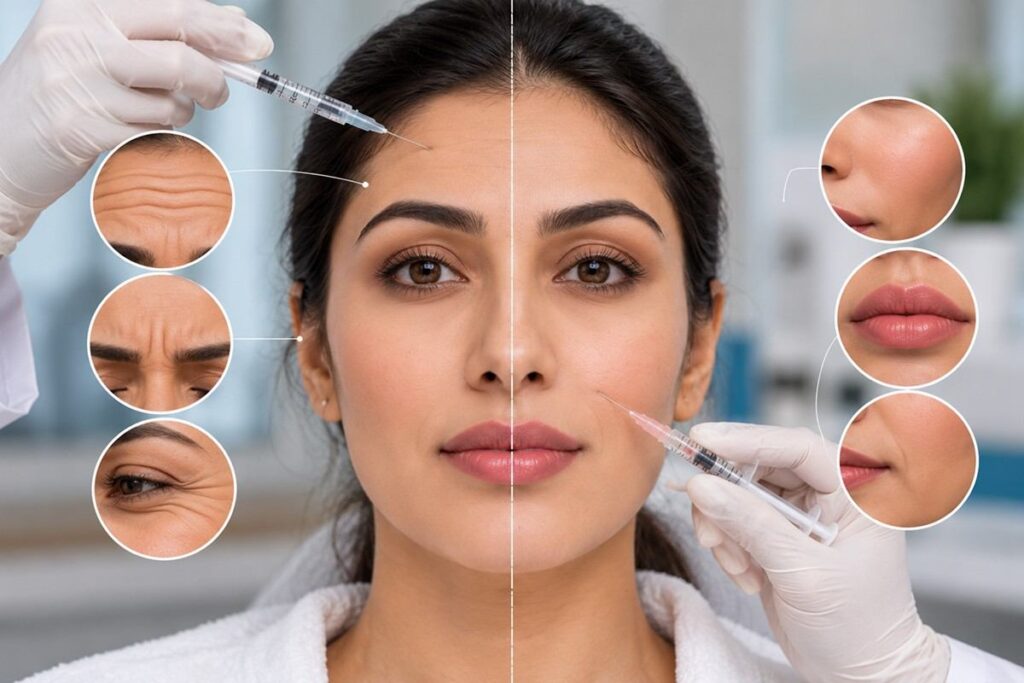


Hollow cheeks, deeper smile lines or a tired look that sleep does not fix are often signs of facial volume loss. Dermal fillers are the option most people hear about first, but they are only one of several. Some popular anti-ageing treatments do not restore volume at all.
Here is how each option works, and how a dermatologist decides between them.
Understanding Facial Volume Loss: Why Does It Happen?
Facial ageing affects every layer of the face: bone, fat, muscle and skin. Because volume loss rarely comes from one layer alone, the right treatment depends on what has actually changed.
Changes in Facial Fat Compartments
Facial fat sits in separate pockets called fat compartments. With age, some of these compartments shrink and others shift downward. When the deep cheek fat shrinks, the mid-face looks flatter and the folds running from the nose to the corners of the mouth can deepen.
Bone and Structural Changes
Parts of the facial skeleton slowly resorb (thin out) with age, including areas around the eye sockets, the upper jaw and the jawline. Less bony support can add to under-eye hollowness and a softer jawline.
Collagen and Elastin Changes
Collagen keeps skin firm and elastin helps it spring back. Both decline with age and sun exposure, so skin becomes thinner and looser. This is skin laxity, not volume loss, although the two often appear together.
Genetics and Lifestyle Factors
Inherited face shape, major weight loss, smoking and sun exposure can speed up these changes, which is why some people notice hollowing in their thirties.
What Are Dermal Fillers and How Do They Work?
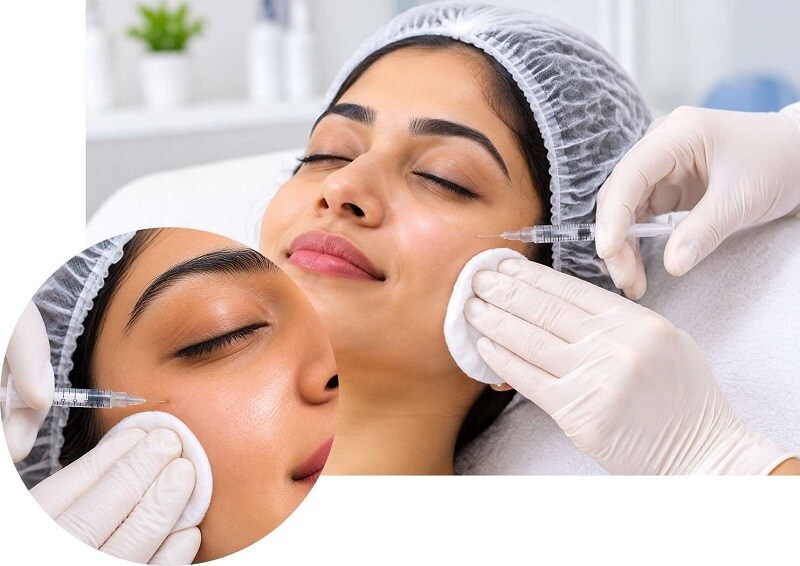
Dermal fillers are injectable gels placed beneath the skin to replace lost volume, soften folds or enhance contours. Injecting them is a medical procedure.
Hyaluronic Acid Fillers
Most facial fillers used today are hyaluronic acid (HA) fillers. Hyaluronic acid is a sugar molecule found naturally in skin that holds water. HA fillers come in different consistencies: firmer gels give structural support to the cheeks or jawline, while softer gels suit the lips or fine lines.
An important safety feature is that HA fillers can be dissolved with an enzyme called hyaluronidase if there is a complication or the result is not as planned.
Common Treatment Areas for Facial Fillers
● Cheeks, where cheek fillers can restore mid-face fullness
● Temples
● Under-eye hollows (tear troughs)
● Lips and the area around the mouth
● Chin and jawline
At Skin & Hair Surgery, hyaluronic acid options such as Juvederm dermal fillers may be considered for several of these areas after a facial assessment. The under-eye area needs particular care because the skin there is thin and close to many blood vessels.
How Long Do Dermal Fillers Last?
Most HA filler results are immediate but temporary. The American Academy of Dermatology lists HA gel fillers as lasting roughly 4 to 12 months. The actual duration depends on the product, the area treated and the individual. Maintenance sessions are needed to keep the result.
If you are weighing fillers against anti-wrinkle injections, it helps to understand how Botox and fillers differ, since they treat different concerns.
What Are the Other Facial Volume-Restoration Options?
Not every anti-ageing treatment adds volume, so it helps to sort options into two groups.
Treatments That Restore Facial Volume
Biostimulatory injectables. Poly-L-lactic acid (PLLA) and calcium hydroxylapatite (CaHA) work differently from HA fillers. PLLA prompts the body to build its own collagen over a course of sessions, so results develop over weeks to months. CaHA gives some immediate volume and also stimulates collagen. Neither can be dissolved the way HA can. You can read more about Sculptra, a PLLA-based treatment for gradual volume restoration.
Fat grafting (autologous fat transfer). Fat is taken from your own body, usually the abdomen or thighs, by liposuction, then processed and injected into the face. It is surgical, with more swelling and a donor area to heal. Not all transferred fat survives, so a further session is sometimes needed. The fat that does survive can last for years.
Treatments That Mainly Improve Skin Laxity or Skin Quality
Radiofrequency (RF) and ultrasound-based skin tightening (HIFU or microfocused ultrasound) heat deeper layers of the skin to stimulate collagen remodelling. They can improve mild to moderate laxity, but they do not add volume. Our skin tightening treatments comparison explains how these technologies differ.
Thread lifts reposition sagging tissue with dissolvable threads; they lift rather than refill. Skin boosters are lightly cross-linked HA injected superficially to improve hydration and texture, not structural volume.
Many patients benefit from a combination: volume replaced where it has been lost, and skin quality or laxity treated separately.
Dermal Fillers vs Other Facial Volume-Restoration Treatments
| Treatment | Main Purpose | How It Works | Expected Longevity | Downtime | Important Considerations |
|---|---|---|---|---|---|
| Hyaluronic acid fillers | Restore volume and contour | Water-binding gel adds volume | About 4–12 months (AAD) | Minimal; brief bruising or swelling | Immediate; dissolvable with hyaluronidase |
| PLLA biostimulator | Gradual volume restoration | Stimulates your own collagen | About 1–3 years (AAD) after a course | Minimal; massage may be advised | Gradual; not dissolvable; nodule risk |
| CaHA filler | Volume and contour | Mineral-particle gel; also stimulates collagen | About 6–12 months (AAD) | Minimal | Not dissolvable; avoided in some delicate areas |
| Fat grafting | Larger-volume restoration | Your own fat is harvested and re-injected | Surviving fat can last years; survival varies | Longer; swelling for one to several weeks | Surgical; less predictable; may need repeat |
| Radiofrequency / HIFU | Skin tightening, not volume | Heat stimulates collagen remodelling | Gradual; maintenance usually needed | Minimal | Suits mild to moderate laxity |
| Thread lift | Lift sagging tissue | Dissolvable threads reposition tissue | Temporary; varies | A few days | Lifts rather than adds volume |
Durations are general published ranges and vary with product, area and individual factors.
Not sure which facial rejuvenation treatment may suit your concerns?
A qualified dermatologist at Skin & Hair Surgery can assess your face and explain your options based on your skin condition and goals.
How to Choose the Right Facial Volume-Restoration Treatment
There is no single best treatment for facial volume loss. A dermatologist usually weighs these factors together:
● Age and facial anatomy: Bone structure and where ageing shows first shape the plan.
● Degree of volume loss: Mild, localised hollowing often responds well to HA fillers. Widespread or larger deficits may suit biostimulators or fat grafting.
● Skin elasticity: If loose skin is the main concern, adding volume alone may look heavy. Tightening or lifting may be part of the plan.
● Treatment goals: Immediate change, or a gradual one?
● Medical history: Allergies, autoimmune conditions, blood thinners and past cosmetic treatments all matter.
● Budget and maintenance: HA fillers cost less per session but need repeat treatments. Fat grafting costs more upfront and involves surgery.
● Risk and recovery: How much downtime can you take, and does reversibility matter?
● Clinical assessment: An in-person examination is what ties these factors into a safe, individual plan.

Who May Be a Suitable Candidate for Dermal Fillers?
Dermal fillers may suit healthy adults with mild to moderate, localised volume loss and realistic expectations about temporary results.
Extra caution, or a different approach, may be needed if you:
● Are pregnant or breastfeeding, as filler safety has not been established in these groups
● Have an active skin infection, acne flare or cold sore in the treatment area
● Have a bleeding disorder or take blood-thinning medicines
● Have a history of severe allergies, or an allergy to lidocaine (a numbing agent included in some fillers)
● Have an autoimmune condition, or a permanent filler already in the area
● Mainly have loose skin rather than lost volume
Risks and Safety Considerations of Dermal Fillers and Other Treatments
Every option carries risks. Most are minor; some are serious.
Common, Temporary Side Effects
Redness, swelling, tenderness and bruising are common and, according to the American Academy of Dermatology, usually settle within 7 to 14 days.
Less Common Complications
These include lumps, uneven or overfilled areas, infection, allergic reactions and skin discolouration. HA filler placed too close to the surface can sometimes leave a bluish tint, particularly under the eyes.
Vascular Occlusion: A Rare but Serious Risk
Vascular occlusion happens when filler enters or presses on a blood vessel and blocks blood flow. It can cause tissue damage (necrosis) and, rarely, vision loss or stroke. Warning signs include sudden severe pain, skin turning pale or dusky, and any change in vision. These need urgent medical attention. Doctors who inject HA fillers should have hyaluronidase available for emergencies.
Treatment-Specific Risks
PLLA can cause small bumps under the skin (nodules). Fat grafting carries surgical risks, including uneven results and donor-site problems. RF and ultrasound devices can occasionally cause burns, temporary numbness or nerve irritation.
Why the Practitioner Matters
The AAD notes that serious side effects become more frequent when fillers are injected in non-medical settings or by inexperienced providers. Choose a qualified doctor, ask which product is used, and avoid salon or home treatments.
When Should You Consult a Dermatologist?
Consider a professional assessment if:
You are unsure whether your concern is volume loss, skin laxity or both
● You notice facial hollowing without an obvious reason such as weight loss
● You had fillers before and are unhappy with the result
● You are considering combining treatments
● You have a medical condition or take regular medicines
A dermatologist can explain realistic outcomes and whether treatment is needed at all.
Making an Informed Choice
Dermal fillers suit many people with localised volume loss, but biostimulators, fat grafting and skin tightening each solve a different problem. Knowing what has changed in your face is the first step to choosing well.
Important Reads
1. Botox vs Fillers: What Is the Difference and What Concerns Does Each Address? – Explains which concerns need volume and which need muscle relaxation.
2. Sculptra vs Dermal Fillers – Which Anti-Aging Treatment Lasts Longer? – A deeper look at collagen-stimulating injectables versus HA fillers.
3. Skin Tightening Treatments Compared: Which Suits You? – For readers whose main concern is loose skin rather than lost volume.
Frequently Asked Questions About Dermal Fillers and Facial Volume Restoration
There is no single best treatment. Hyaluronic acid fillers often suit mild, localised volume loss, while biostimulators such as PLLA or fat grafting may suit wider or larger deficits. The right choice depends on where volume has been lost, your skin quality, goals and medical history, assessed in person by a dermatologist.
Neither is better for everyone. Fillers are non-surgical, give immediate results and HA fillers can be dissolved, but they need maintenance. Fat grafting uses your own tissue and surviving fat can last years, but it involves liposuction, more downtime and less predictable results. Suitability depends on the amount of volume needed.
Most hyaluronic acid fillers last about 4 to 12 months, according to the American Academy of Dermatology. Some products and treatment areas last longer. Duration depends on the filler type, how much is used, where it is placed and individual factors, so maintenance sessions are usually needed to keep results.
Yes. Biostimulatory injectables such as poly-L-lactic acid restore volume gradually by stimulating collagen. Radiofrequency, HIFU and thread lifts are also non-surgical, but they mainly tighten or lift skin rather than replace lost volume. A dermatologist can advise whether volume, laxity or both need treatment.
Not significantly. Sun protection, not smoking, stable weight, good sleep and a balanced diet can slow ageing-related changes, but they cannot rebuild lost fat or bone. Facial exercises have limited evidence. Once volume has been lost, restoring it usually requires a medical treatment such as fillers, biostimulators or fat grafting.
No. Fillers are generally avoided during pregnancy and breastfeeding and may need caution with active skin infections, bleeding disorders, blood thinners, severe allergies or autoimmune conditions. People whose main concern is loose skin may benefit more from other treatments. A medical evaluation helps confirm whether fillers are appropriate.
Dermal fillers add volume by placing gel beneath the skin. Skin-tightening treatments such as radiofrequency and HIFU use heat to stimulate collagen and improve mild laxity, but do not add volume. Fillers address hollowing; tightening addresses looseness. Many people have some of both, so treatments are sometimes combined.
A consultation with a qualified dermatologist is the most reliable way. They examine your bone structure, fat distribution and skin elasticity, review your medical history and discuss your goals, budget and downtime. This helps identify whether you need volume restoration, skin tightening, a combination, or no treatment at all.