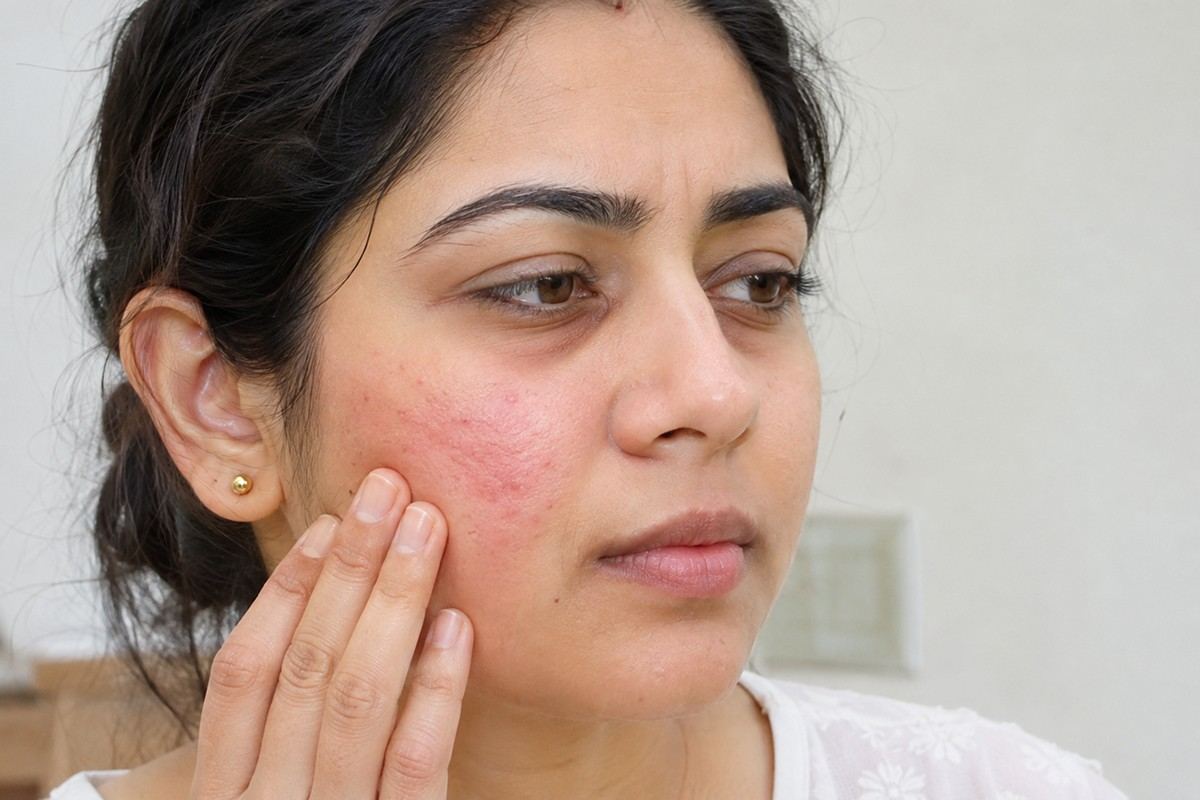

Your face feels tight a few minutes after washing. The moisturiser you have used for years suddenly stings. Your shins look ashy and itch at night. If this sounds like your November to February, your skin barrier is probably struggling.
Winter skin barrier damage happens when the outermost layer of skin loses water and protective fats faster than it can replace them, usually because of dry air, hot water and harsh products. The result is skin that feels dry, reactive and uncomfortable. The good news is that mild barrier damage usually responds to simple, consistent changes. The important part is knowing when it is more than dryness.
What Is the Skin Barrier and Why Is It Important?
The skin barrier is the top layer of your skin, called the stratum corneum. Dermatologists often compare it to a brick wall: skin cells are the bricks, and natural fats such as ceramides, cholesterol and fatty acids are the mortar holding them together.
How Does a Healthy Skin Barrier Work?
A healthy barrier does two jobs at once. It keeps water in, and it keeps irritants, allergens and microbes out. When it is intact, skin feels soft, comfortable and tolerates most gentle products.
What Happens When Your Skin Barrier Gets Damaged?
When the “mortar” thins out, gaps form between skin cells. Water escapes more easily (doctors call this transepidermal water loss), and substances that normally sit harmlessly on the surface start to irritate. That is why a damaged skin barrier feels both dry and sensitive at the same time.
Why Does Skin Barrier Damage Increase During Winter?
Winter does not damage skin on its own; it stacks several stresses together.
● Low humidity and cold air. Cooler air holds less moisture, so skin loses water faster. Pune’s winters are mild but dry, and North India adds cold winds.
● Heaters and blowers. Room heaters lower indoor humidity further, especially overnight.
● Hot baths. A steaming bucket bath feels wonderful, but hot water strips the skin’s natural oils. Long or repeated baths make it worse.
● Harsh soaps and over-cleansing. Strong bar soaps, foaming face washes and washing the face many times a day remove protective lipids.
● Over-exfoliation. Scrubs, besan or ubtan rubbed hard, AHA/BHA acids and peel pads can thin an already stressed barrier.
● Incorrect use of actives. Retinol, retinoids and acne products are more likely to irritate in dry weather.
● Existing skin conditions. People with eczema (atopic dermatitis) or psoriasis already have a weaker barrier and often flare in winter.
7 Common Signs of a Damaged Skin Barrier
You do not need all of these. Two or three together, especially after a change in weather or routine, are a useful clue.
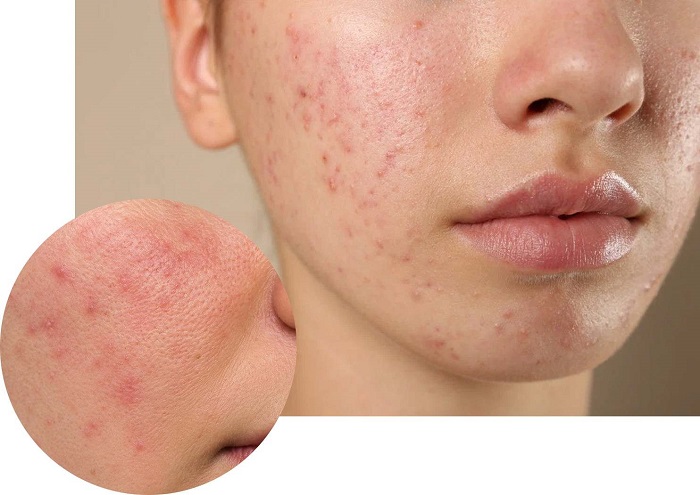
1. Persistent dryness. Skin feels dry even after moisturising, or looks dull and ashy.
2. Redness and irritation. Patches look pink or red on fair skin, or darker and greyish on brown skin.
3. Tightness after washing. Your face feels “pulled” within minutes of cleansing.
4. Itching and sensitivity. Skin itches, especially at night or after a bath.
5. Rough or flaky skin. Fine scales, rough texture, or cracks on lips, hands and heels.
6. Burning or stinging. Products that never bothered you now sting for a few seconds or longer.
7. New reactions to skincare. You react to fragrance, actives or even plain moisturisers.
These signs are not a diagnosis. Eczema, contact dermatitis, rosacea and fungal infections can look similar, which is why persistent symptoms need an examination.
How to Repair a Damaged Skin Barrier During Winter
Barrier repair is mostly about removing what is hurting the skin and giving it what it needs. Keep the routine short.
Use a Gentle, Non-Stripping Cleanser
Choose a mild, fragrance-free, soap-free cleanser. Wash your face once or twice a day, not more. Massage briefly and rinse; longer scrubbing does not clean better.
Choose Moisturisers With Barrier-Supporting Ingredients
In winter, creams and ointments generally work better than light lotions because they add more moisture and seal it in. Apply within a few minutes of bathing, while skin is still slightly damp, and reapply whenever skin feels dry.
Look for Ceramides, Glycerin and Hyaluronic Acid
A good barrier moisturiser usually combines water-attracting ingredients (glycerin, hyaluronic acid) with ingredients that seal moisture in or replace lost fats (ceramides, petrolatum). More on each ingredient below.
Avoid Excessive Exfoliation and Harsh Actives
Pause scrubs and exfoliating acids until your skin feels comfortable again. Use over-the-counter retinol less often or at a lower strength in winter. If a doctor prescribed your retinoid or acne treatment, ask them before stopping or changing it.
Apply Sunscreen Even During Winter
UV exposure continues on sunny winter days in India, and sun damage weakens the barrier further. Use a broad-spectrum sunscreen of SPF 30 or more on exposed skin. Cream sunscreens tend to be more comfortable on dry skin, or layer sunscreen over moisturiser.
Avoid Very Hot Water and Long Showers
Keep baths to about 5 to 10 minutes with warm, not hot, water. Pat skin dry with a soft towel instead of rubbing, then moisturise immediately.
Winter Skincare Ingredients That Help Support Skin Barrier Health
| Ingredient | What it does | Limitations |
|---|---|---|
| Ceramides | Replace lipids naturally found in the barrier's "mortar" | Work best in a complete moisturiser, not as a quick fix |
| Glycerin | Humectant that draws water into the skin | Needs an occlusive on top in very dry air |
| Hyaluronic acid | Holds water in the outer skin | On its own, can feel tight in low humidity; seal with a cream |
| Petrolatum | Forms a seal that reduces water loss | Heavy; may feel greasy or block pores on acne-prone faces |
| Niacinamide | Helps skin make more of its own ceramides | Higher strengths can sting already-irritated skin; start low |
| Colloidal oatmeal | Soothes itch and dryness | Rarely, people with oat allergy react; patch test first |
Fragrance-free products are the safer choice for reactive skin. If any product burns, stings for long or causes a rash, stop it.
Winter Skincare Mistakes That Can Damage Your Skin Barrier
● Washing your face too often, or with harsh, high-foam face washes or deodorant soaps.
● Overusing exfoliating acids, scrubs or peel pads.
● Layering several actives (retinol, vitamin C, acids) in one routine.
● Skipping moisturiser because your skin “feels oily” in some areas.
● Using very hot water for baths or face washing.
● Following viral skincare trends without knowing your skin type.
● Applying home remedies such as lemon juice, baking soda or toothpaste, which can irritate.
When Should You Consult a Dermatologist for Skin Barrier Damage?
See a dermatologist if you notice any of these:
● Dryness that does not improve after two to three weeks of gentle care.
● Severe itching that disturbs sleep.
● Redness that keeps coming back in the same areas.
● Painful cracks, bleeding, oozing or signs of infection such as pus or spreading redness.
● Persistent burning or stinging, even with simple products.
● Rashes with a clear edge, blisters, or thick silvery scales.
Similar symptoms can come from very different causes. Eczema, irritant or allergic contact dermatitis, seborrhoeic dermatitis, psoriasis and fungal infections each need a different treatment, and some can be worsened by the wrong cream. Dry skin can also be linked to medical conditions such as thyroid or kidney problems. A dermatologist can tell these apart by examining your skin and asking about your history. If your symptoms point to eczema, you can read more about eczema and atopic dermatitis treatment at our clinic.
Is your skin becoming unusually dry, sensitive or irritated this winter?
Don’t ignore persistent skin discomfort. Consult an experienced dermatologist to understand the underlying cause and get a skincare approach suited to your skin type and condition.
Book a dermatologist appointment at Skin & Hair Surgery, Pune.
How Can a Dermatologist Help With Persistent Winter Skin Problems?
A consultation is about finding the cause, not just suggesting another cream. At Skin & Hair Surgery in Pune, Dr. Pradeep Kumari and her team will typically:
● Assess your skin and ask about your routine, bathing habits, products, medicines and other health conditions.
● Identify the underlying cause, separating simple winter dryness from eczema, dermatitis, rosacea or infection.
● Recommend an individualised routine, including which products to stop and which to use.
● Prescribe medical treatment where needed, such as a short course of an anti-inflammatory cream for dermatitis. Prescription creams should only be used under medical guidance.
● Plan around other concerns. If you also manage acne or redness, treatment can be adjusted so it does not keep damaging the barrier. Our acne treatment and rosacea care pages explain these services.
Most cases of winter dryness do not need any in-clinic procedure. Treatment depends entirely on the diagnosis. You can explore our full range of dermatology services in Pune.
Which In-Clinic Procedures Can Support Skin Barrier Repair?
For most people, the home care above is enough. In-clinic procedures are not a first step for winter dryness. A dermatologist may suggest one when dryness, dullness, redness or uneven texture continue after the skin has calmed down, and after eczema, dermatitis or infection have been ruled out or treated.
Timing matters. Most procedures are planned only when the skin is no longer actively red, raw or stinging, because treating inflamed skin can make irritation worse. At Skin & Hair Surgery, Dr. Pradeep Kumari decides whether a procedure is suitable after examining your skin.
Photo Facial (IPL)
A photo facial uses intense pulsed light (IPL), not a laser, to target redness, visible blood vessels and sun-related pigmentation. It does not rebuild the barrier itself. It may help people whose sensitive skin comes with persistent redness, such as rosacea. Settings must be adjusted carefully for Indian skin tones to lower the risk of pigment changes.
Skin Booster Injections
Skin boosters are tiny injections of a hydrating gel, usually based on hyaluronic acid, placed just under the skin surface. They aim to improve skin hydration, smoothness and glow from within. They are usually given as a course of sessions, and results are temporary. They work alongside daily moisturiser and sunscreen, not instead of them. Read more in our blog on skin boosters.
PDRN Face Treatment
PDRN (polydeoxyribonucleotide) is made from purified salmon DNA fragments and is delivered by injection or with microneedling. Studies suggest it may support skin repair, hydration and elasticity, and early research has looked at barrier function too. The evidence is still growing, so results vary. It is not suitable during pregnancy or with active skin infection. Read more about PDRN therapy for skin.
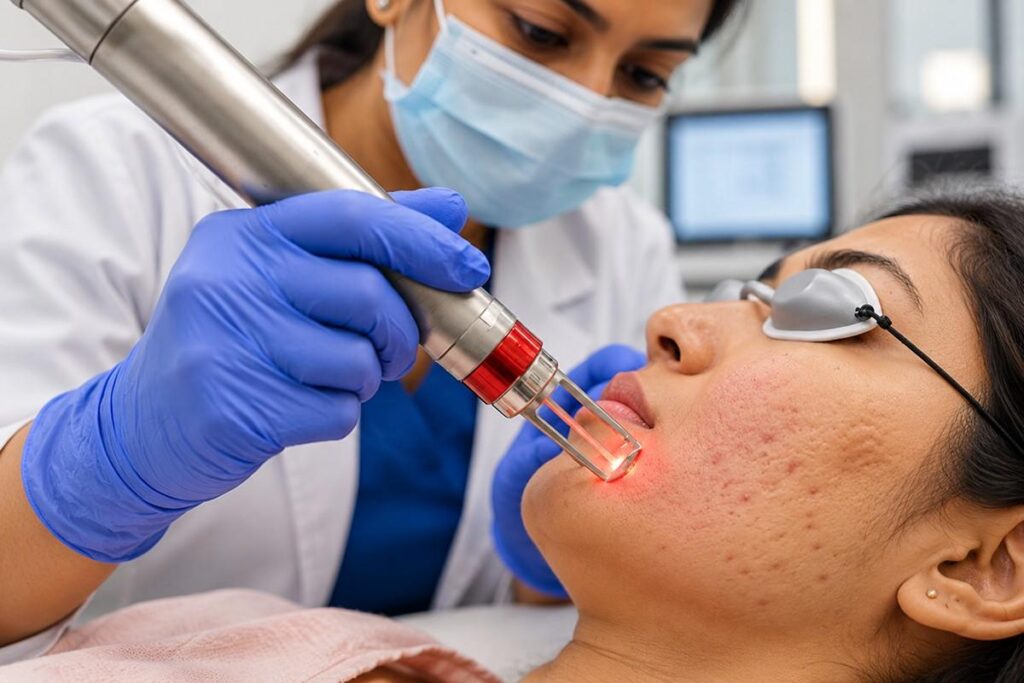
Collagen Stimulator Laser (RedTouch Pro)
RedTouch Pro is a non-ablative laser that uses a 675 nm wavelength to target collagen in the deeper layer of the skin. Its maker reports that it stimulates new collagen while protecting the surface layer, with minimal downtime. It is mainly used for skin quality concerns such as fine lines, texture and pigmentation, rather than for dryness itself. It may be considered once the barrier has recovered.
| Procedure | Main purpose | Best suited for | Points to know |
|---|---|---|---|
| Photo facial (IPL) | Reduce redness and sun pigmentation | Sensitive skin with persistent redness | Not on irritated or recently tanned skin |
| Skin booster injections | Deep hydration and skin quality | Chronically dull, dehydrated skin | Course of sessions; results temporary |
| PDRN face treatment | Support repair and hydration | Dull, tired or sensitised skin after it settles | Evidence still emerging; not in pregnancy |
| RedTouch Pro laser | Stimulate collagen | Texture, fine lines, pigmentation | Only after the barrier has recovered |
No procedure can promise a particular result, and none replaces gentle daily skincare. Your dermatologist will explain the expected benefits, possible side effects and number of sessions before you decide.
Frequently Asked Questions About Winter Skin Barrier Damage
The first signs are usually tightness after washing, dryness that returns soon after moisturising, and stinging when you apply products that never bothered you before. Redness, itching and flaking often follow. If these appear after a change in weather or routine, simplify your skincare and watch for improvement.
Yes. Cold, dry air increases water loss from the skin, and winter habits such as hot baths and room heaters add to the stress. Healthy skin often copes, but people with dry or sensitive skin, eczema, or those using strong actives are more likely to develop barrier damage in winter.
Mild irritation often feels better within a few weeks once triggers are removed and you moisturise consistently. Cleveland Clinic notes it can take three to four months to see the full benefits of barrier care. Recovery is slower with age or an underlying skin condition, so persistent symptoms deserve a dermatologist’s review.
Ceramides, glycerin, hyaluronic acid, petrolatum, niacinamide and colloidal oatmeal are among the most useful. Ceramides and petrolatum help restore and seal the barrier, while glycerin and hyaluronic acid attract water. A fragrance-free cream that combines water-attracting and sealing ingredients usually works better than any single ingredient.
If over-the-counter retinol is causing stinging, redness or peeling, pause it until your skin settles, then restart less often or at a lower strength. Do not stop a prescribed retinoid or acne medicine on your own; speak to the doctor who prescribed it, as they can adjust the plan.
For mild winter dryness, a suitable moisturiser combined with gentle cleansing, shorter warm baths and fewer actives is often enough. Moisturiser alone may not help if the cause is eczema, contact dermatitis or an infection. If symptoms persist beyond a few weeks, a dermatologist should check the underlying cause.
It can contribute. Cleveland Clinic lists acne among the signs of barrier damage, and irritated skin can react with breakouts. Heavy, pore-blocking products used to fix dryness can also trigger acne. Choose non-comedogenic moisturisers, and see a dermatologist if breakouts persist so acne and dryness are treated together.
See a dermatologist if dryness lasts more than two to three weeks despite gentle care, itching disturbs your sleep, skin cracks or bleeds, or you notice blisters, oozing, thick scales or spreading redness. These signs may point to eczema, dermatitis or infection, which need a proper diagnosis.
Protect Your Skin Barrier This Winter With the Right Dermatological Care
Most winter skin barrier damage comes from a combination of dry air and everyday habits: hot baths, harsh cleansers and too many activities. Cleanse gently, moisturise on damp skin, pause exfoliation, keep up your sunscreen, and give your skin time. If symptoms persist, return, or come with pain, cracks or rashes, get them checked rather than switching products again and again.
Experiencing persistent dryness, irritation or sensitive skin this winter? Get your skin assessed by a qualified dermatologist and understand the right approach to maintaining healthy skin.
Book your consultation with Dr. Pradeep Kumari at Skin & Hair Surgery today, at our Viman Nagar, Kothrud or Aundh clinics in Pune.