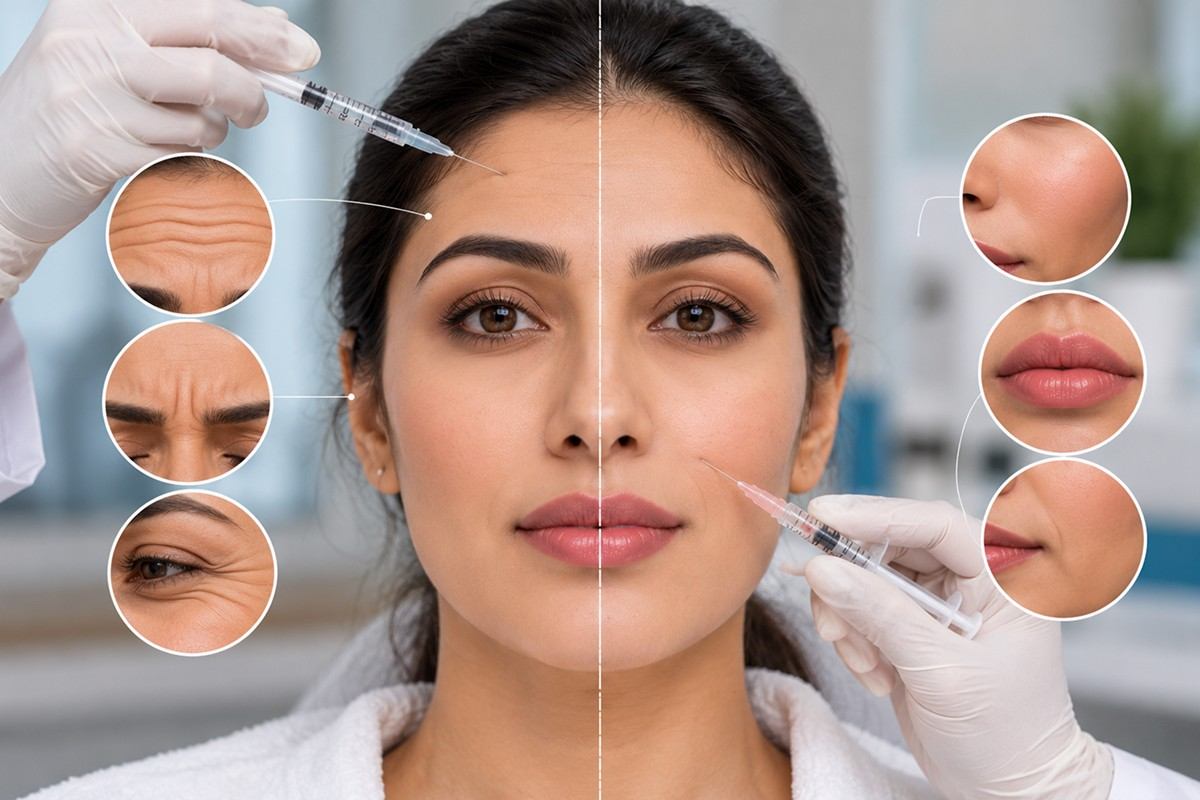

Botox and dermal fillers are both injectable treatments, but they do different jobs. Botox (botulinum toxin) temporarily relaxes targeted facial muscles, so it is mainly used for lines that form with expression, such as forehead lines, frown lines and crow’s feet. Dermal fillers are gels placed under the skin to restore lost volume or soften selected folds, for example in the cheeks, lips or the lines from nose to mouth. Neither is permanent, and neither suits everyone. Whether either is right for you depends on your concern, your medical history and a professional assessment.
Botox: How Does It Work and What Concerns Can It Address?
In cosmetic dermatology, “Botox” usually refers to botulinum toxin type A. Botox is one brand; Dysport and Xeomin are others. Tiny amounts are injected into specific facial muscles, where the toxin blocks the nerve signals that make those muscles contract. With less movement, the creases above them soften.
It is most often used for:
● Horizontal forehead lines
● Frown lines between the eyebrows
● Crow’s feet at the outer corners of the eyes
Botox works best on dynamic wrinkles, which appear when you make an expression. Lines that are visible even at rest also improve, but more slowly. Botox does not add volume, so it cannot fill hollow cheeks or thin lips.
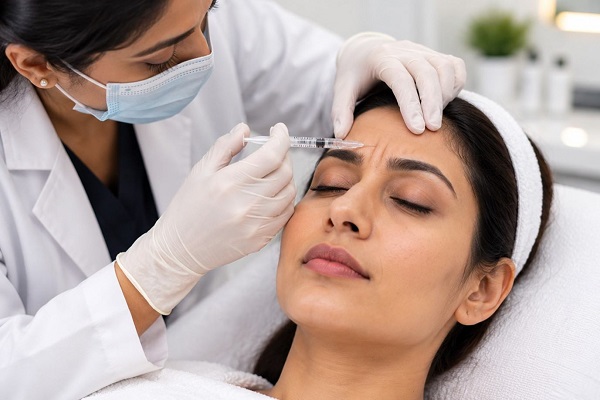
Common side effects include mild pain, swelling or bruising at the injection site and headache. A temporarily drooping eyelid or brow can occur if the effect reaches a nearby muscle. If you are exploring this option, our page on Botox treatment in Pune explains how the procedure is carried out at the clinic. You can also read what to expect from Botox, including cost and aftercare.
Dermal Fillers: How Do They Work and What Concerns Can They Address?
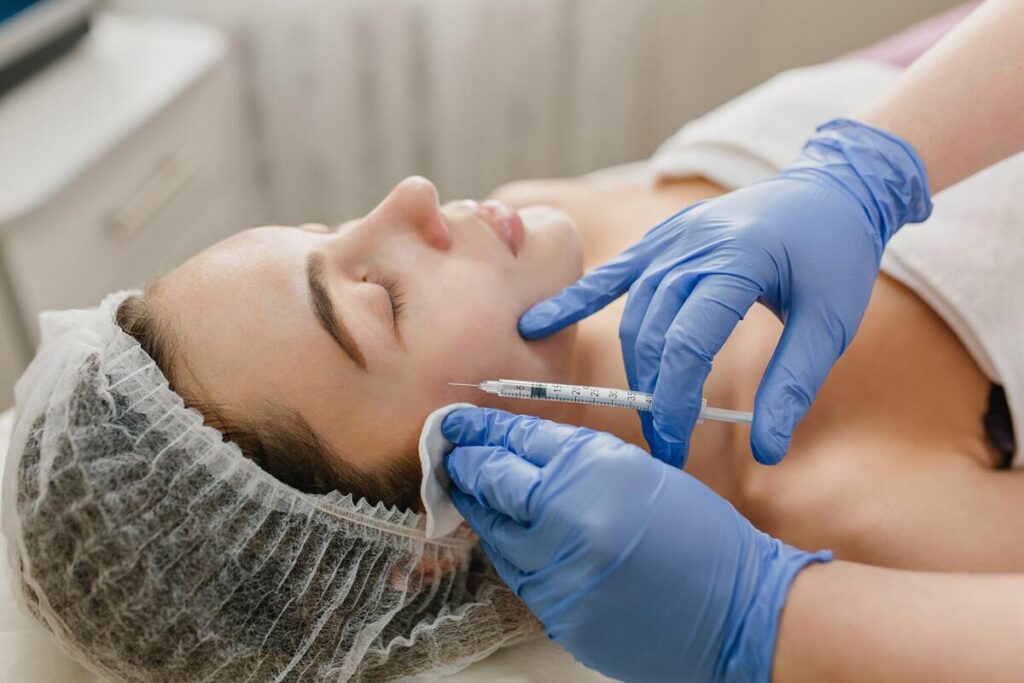
Dermal fillers are injectable implants placed under the skin to create a smoother or fuller appearance. Regulators have approved specific fillers for areas such as the lines from nose to mouth (nasolabial folds), lines around the lips, the lips themselves, the cheeks and the chin.
The most widely used type is hyaluronic acid (HA) filler. HA is a substance found naturally in skin. Brands such as Juvederm hyaluronic acid filler belong to this group. Other materials include calcium hydroxylapatite, poly-L-lactic acid (which stimulates collagen gradually rather than filling immediately) and PMMA, which is permanent. HA fillers are generally easier to reduce or remove than non-HA or permanent fillers.
● Cheek volume loss: HA fillers such as Restylane or Juvederm give an immediate lift. Sculptra may be preferred when volume loss is broader and a gradual result is wanted.
● Thin or uneven lips: HA fillers only. Sculptra is not used in the lips. For what to expect, see lip enhancement with fillers.
● Nose-to-mouth folds and lines around the mouth: HA fillers in selected cases, when the fold comes from volume loss rather than sagging skin.
● Chin and jawline contour: firmer HA fillers or calcium hydroxylapatite, which give more structure.
Fillers are usually not the first choice for:
● Lines caused by muscle movement, such as forehead lines and frown lines. These respond better to Botox.
● Folds caused mainly by loose or sagging skin. These may need skin tightening or a lift.
● Dull or rough skin texture. This is better suited to skin boosters or resurfacing.
Fillers do not stop muscle movement. Short-term redness, swelling, tenderness and bruising are common. Lumps, infection and, rarely, blocked blood vessels can also occur (see the risks section below).
HA vs Non-HA Fillers: Where Do Sculptra and Other Options Fit?
Not all fillers are hyaluronic acid. Non-HA fillers work differently and are usually chosen for different goals.
● Sculptra (poly-L-lactic acid): a collagen stimulator rather than an instant filler. It is given over a series of sessions spaced several weeks apart. Results build gradually as your skin makes new collagen and can last up to about two years. It is used for broader volume loss, such as the cheeks and temples, not for the lips or around the eyes.
● Calcium hydroxylapatite (e.g. Radiesse): adds volume straight away and also encourages some collagen. Results typically last 6–12 months.
● PMMA: a permanent filler. It is used less often because problems are harder to correct.
Unlike HA fillers, non-HA fillers cannot be dissolved. Firm lumps or nodules are a recognised risk, so technique and patient selection matter. Some injectables, such as skin boosters, also use HA, but to hydrate the skin rather than add volume.
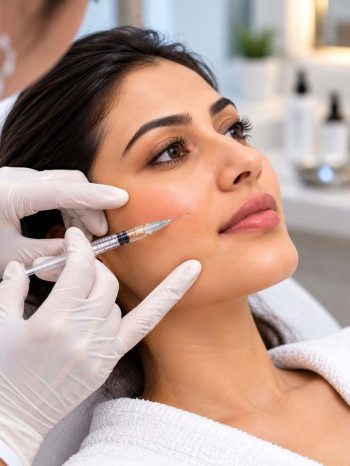
| HA fillers (Restylane, Juvederm) | Sculptra (PLLA) | |
|---|---|---|
| How it works | Adds volume directly | Stimulates your own collagen |
| Results show | Immediately | Gradually, over weeks to months |
| Sessions | Usually one | A series, spaced weeks apart |
| Typical duration | About 4–12 months | Up to about 2 years |
| Can be dissolved? | Yes | No |
| Common uses | Lips, cheeks, folds | Broader volume loss, cheeks, temples |
For a detailed comparison of longevity and cost, read our guide on Sculptra vs dermal fillers.
Botox vs Fillers: Key Differences at a Glance
| Feature | Botox (botulinum toxin) | Dermal fillers |
|---|---|---|
| How it works | Temporarily relaxes targeted muscles | Adds or restores volume under the skin |
| Main purpose | Soften expression lines | Restore volume, contour, soften selected folds |
| Common areas | Forehead, between brows, crow's feet | Cheeks, lips, nose-to-mouth folds, chin |
| Effect on muscle movement | Reduces it in the treated area | None |
| Effect on facial volume | None | Adds volume |
| When results show | Starts within a few days; full effect in about 2 weeks | Most HA fillers: immediate. Poly-L-lactic acid: 2–3 weeks |
| Typical duration | About 3–4 months, sometimes longer | HA: about 4–12 months. Calcium hydroxylapatite: 6–12 months. Poly-L-lactic acid: 1–3 years |
| Common side effects | Injection-site bruising, headache, temporary droop | Redness, swelling, tenderness, bruising |
| Serious risks (rare) | Spread of effect beyond the injection site | Injection into a blood vessel: tissue damage, vision loss, stroke |
| Generally suited to | Dynamic lines from repeated expression | Volume loss and selected static folds |
Durations are typical ranges from medical sources. Individual results vary with the product, dose, treatment area and the person.
Botox for Wrinkles: Which Types of Lines May Respond?
A simple way to think about it: does the line appear when you move, or is it there when your face is relaxed?
● Forehead lines: form when you raise your eyebrows; commonly treated with Botox.
● Frown lines: the vertical “11s” between the brows; among the most common Botox areas.
● Crow’s feet: fan out when you smile or squint; often respond to Botox.
Deeply etched static lines may not fully soften with Botox alone. They may need a different assessment, which could include fillers, resurfacing or other wrinkle treatment options.
For fine lines and skin texture rather than deeper expression lines, a more superficial technique called Mesobotox is sometimes used.
Dermal Fillers for Facial Volume: Which Concerns May They Address?
With age, the face loses fat, collagen and bone support. Fillers may help with flattened cheeks, thinning lips and folds that deepen because of that volume loss.
Not every fold is a filler problem. Lines caused mainly by loose skin may respond better to skin-tightening or lifting approaches. Some areas, such as around the eyes and the nose, carry higher risk and need particular care. Overfilling also tends to look unnatural, so a conservative approach is usually preferred.
Fillers are also sometimes used for selected depressed acne scars, usually alongside other scar treatments.
Botox vs Fillers for Different Facial Concerns
| Facial Concern | Treatment That May Be Considered | Reason | Important Consideration |
|---|---|---|---|
| Forehead lines | Botox | Lines come from muscle movement | Dosing must preserve natural brow position |
| Frown lines | Botox | Caused by frowning muscles | Deep resting lines may need added treatment |
| Crow's feet | Botox | Caused by smiling and squinting | Skin texture may need separate care |
| Cheek volume loss | Fillers | Restores lost volume and contour | Product choice and depth matter |
| Lip volume | Fillers | Adds shape and fullness | Conservative volume looks more natural |
| Nose-to-mouth folds | Fillers (selected cases) | Softens folds linked to volume loss | Sagging skin may need a different approach |
This table is general education, not a personal treatment plan.
Considering Botox or Dermal Fillers?
The right approach depends on your facial concerns, goals, medical history and an in-person assessment. A qualified dermatologist can explain suitable options, risks and realistic expectations.
Book a consultation with a dermatologist at Skin & Hair Surgery, Pune to discuss whether either treatment fits your concern.
Botox and Fillers Together: Can Both Treatments Be Used?
Yes, in some cases. Because they work differently, a practitioner may suggest Botox for upper-face expression lines and filler for lower-face volume, sometimes in one visit. However, the combined use has not been tested for safety in controlled clinical studies. Combination treatment is not necessary for everyone, and the plan should be individualised.
Botox vs Fillers Duration: How Long Can Results Last?
Botox results typically last about three to four months, after which muscle activity and lines gradually return. Filler duration depends on the material: HA gels commonly last 4–12 months, while some collagen-stimulating fillers can last 1–3 years. The treated area, product, dose and your own metabolism all affect this. No fixed duration can be guaranteed.
Botox vs Fillers Side Effects: What Are the Risks?
Botox side effects
Most are mild and short-lived: pain, swelling or bruising at the injection site, headache and temporary drooping of an eyelid or brow. Rarely, the toxin’s effect can spread beyond the treated area and cause serious symptoms. People with certain neuromuscular conditions may not be suitable candidates.
Dermal filler side effects
Redness, swelling, tenderness and bruising usually settle within one to two weeks. Less commonly, lumps, nodules, infection or allergic reactions occur. The most serious risk is filler entering a blood vessel. This is rare but can block blood supply and cause tissue damage, vision loss or stroke.
Seek urgent medical help if, during or after a filler treatment, you notice unusual pain, any vision change, skin near the injection site turning white, grey or blue, or signs of stroke such as face drooping, weakness or difficulty speaking.
Botox Treatment in Pune: How to Choose a Qualified Practitioner
Both treatments are medical procedures. Before booking Botox or fillers in Pune, check that:
● The injector is a qualified doctor, such as a dermatologist, with specific training in injectables
● You receive a face-to-face assessment and medical history review first
● Product brand and authenticity are shown to you; avoid unverified or online-bought products
● The procedure takes place in a clinical setting, not a salon, party or home
● Risks, alternatives and costs are explained before you sign consent
● Clear aftercare instructions and a follow-up contact are provided
● The clinic has a plan for managing complications, including vascular events
Botox vs Fillers FAQs: Frequently Asked Questions
Botox relaxes targeted muscles to soften expression lines. Fillers add volume under the skin to restore contour or soften selected folds.
Neither is better overall. Botox suits lines caused by movement; fillers suit volume-related folds. The right choice depends on the type of wrinkle.
No. Botox is a muscle-relaxing medicine, while fillers are gel implants. They are not interchangeable.
Forehead lines from raising the eyebrows are commonly treated with Botox, after assessment by a qualified practitioner.
Fillers may soften nose-to-mouth folds linked to volume loss. If sagging skin is the main cause, another approach may be advised.
Yes, in selected cases, for different concerns. Combination safety has not been studied in controlled trials, so the plan should be individualised.
Botox typically lasts about 3–4 months. HA fillers commonly last 4–12 months; some other fillers last longer.
Most HA fillers show results immediately. Botox begins working within a few days, with the full effect in about two weeks.
Botox is not permanent. Most fillers are temporary; a few permanent fillers exist but are harder to remove if problems occur.
Both commonly cause bruising or swelling. Botox can cause temporary drooping. Fillers carry a rare but serious risk of blocking a blood vessel.
An in-person consultation with a dermatologist, including a look at your face at rest and in motion, is the reliable way to find out.
Yes. Both are medical procedures, and a dermatologist can assess suitability, risks and alternatives.
Important Reads: Related Skin and Dermatology Guides
● Botox Treatment in Pune: Benefits, Cost & What to Expect: procedure steps, cost factors and aftercare for Botox.
● Sculptra vs Dermal Fillers – Which Anti-Aging Treatment Lasts Longer?: collagen-stimulating Sculptra compared with HA fillers.
● Lip Enhancement with Fillers – What to Expect Before and After: a closer look at one of the most common filler uses.
● Mesobotox for a Natural, Healthy Skin Look: a superficial Botox technique for fine lines and texture.
● The Role of Skin Boosters in Anti-Aging Regimens: HA injectables used for hydration rather than volume.
● Skin Tightening Treatments Compared: Which Option Suits Your Skin Concern?: for lines and sagging caused by loose skin rather than muscle movement or volume loss.
Botox vs Fillers: Final Takeaway
Botox and dermal fillers solve different problems. Botox softens lines caused by muscle movement for a few months. Fillers restore volume and contour for months to years, depending on the product. Both carry risks, neither is permanent, and the right choice depends on your concern, medical history and goals.
Explore Your Skin Treatment Options at Skin & Hair Surgery, Pune
If you are considering Botox or dermal fillers, a professional assessment can help you understand which options may be appropriate. Discuss your goals, expected outcomes, alternatives and risks with a qualified dermatologist before deciding.
Book an appointment with a dermatologist at Skin & Hair Surgery at our Viman Nagar, Kothrud or Aundh clinics.