
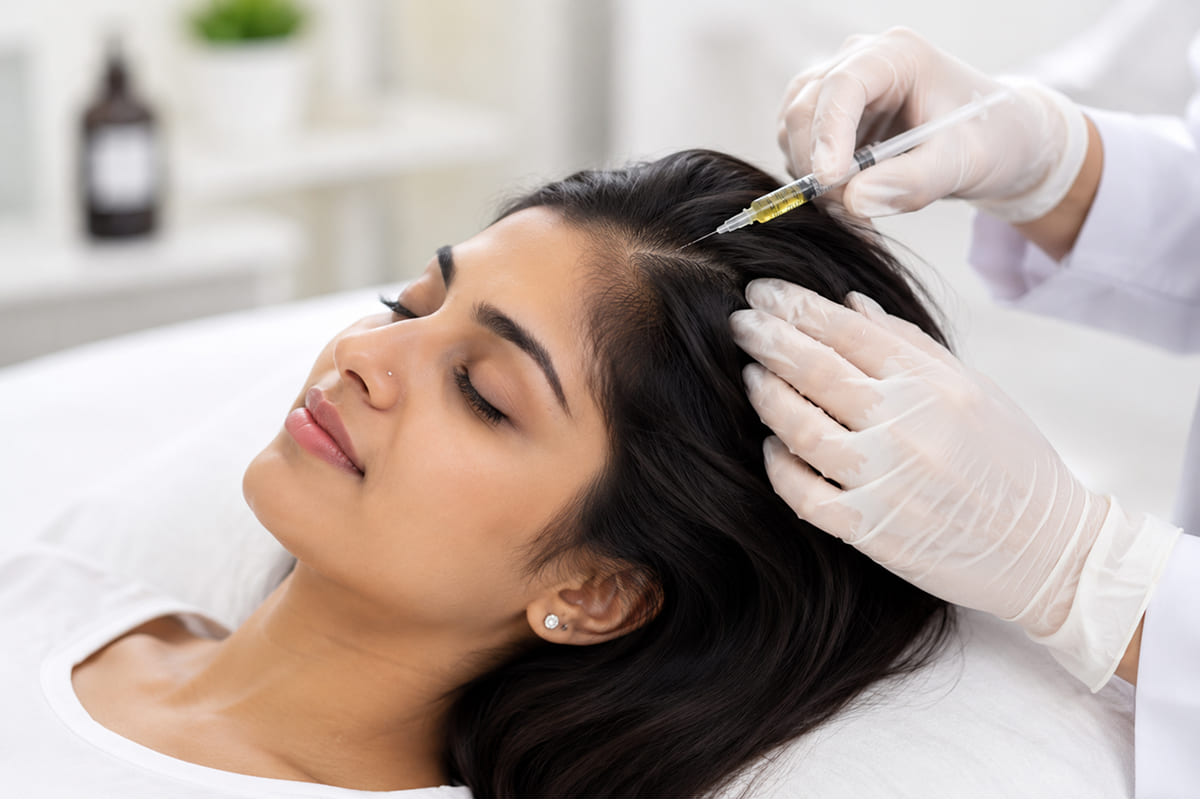

If you’ve been researching hair loss treatments, you’ve probably come across both PRP and stem cell therapy for hair loss — and wondered if they’re basically the same thing. They’re not. Both are non-surgical, needle-based treatments that use material from your own body, which is likely why they get lumped together online. But once you look at what’s actually happening under the scalp, PRP and stem cell therapy (also called follicular suspension therapy) turn out to work on completely different problems. One boosts follicles that are still functioning. The other replaces the specific cells that androgenetic alopecia (AGA) actually depletes. This guide breaks down exactly how stem cell therapy for hair loss differs from PRP, what the extraction and injection process actually involves, who each treatment suits, and what the published research currently shows — in plain language, without the marketing spin.
What Causes Hair Miniaturization in Androgenetic Alopecia?
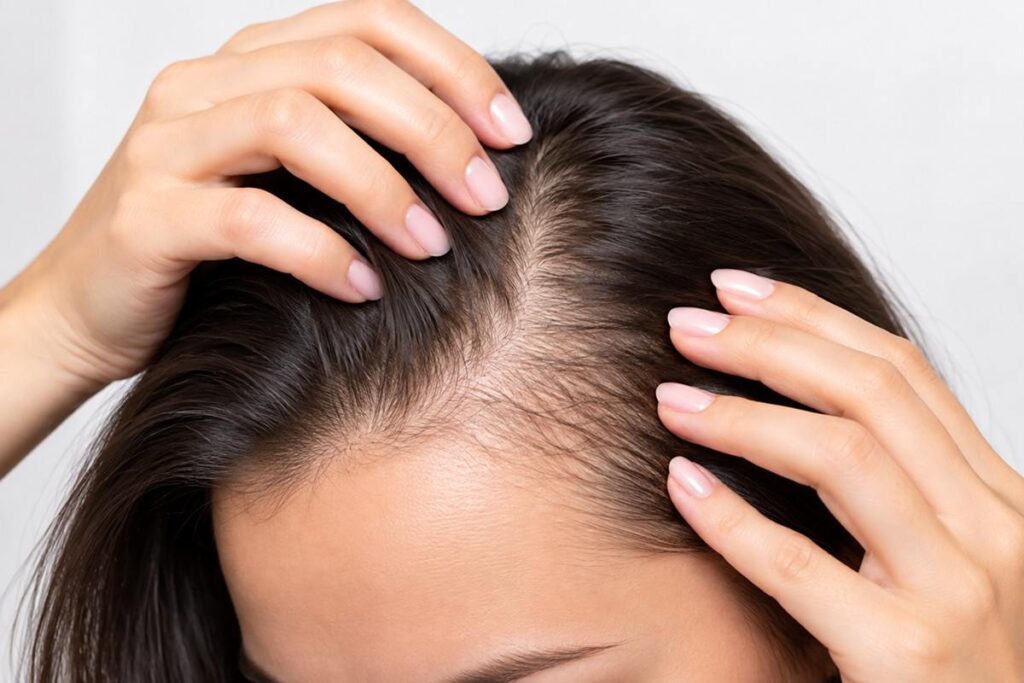
In androgenetic alopecia (AGA) — the most common cause of hair thinning in both men and women — hair follicles don’t disappear overnight. They miniaturize: with each growth cycle, the follicle produces a slightly finer, shorter, and lighter-pigmented hair, until eventually it produces nothing more than a fine, invisible vellus hair. From the outside, this looks like gradual thinning and a widening part. From the follicle’s perspective, it’s a slow loss of function, not a sudden death.
Here’s the part most patients don’t know: research shows that even in bald or thinning scalp areas, the underlying hair follicle stem cell count often stays roughly the same as in healthy scalp. What actually drops is the number of active progenitor cells — specifically CD200+ and CD34+ cells — that trigger those dormant stem cells to keep producing healthy hair fibers. In other words, the “factory” (the stem cell) is still standing; it’s the “workers” (the progenitor cells) that have gone missing. This distinction matters a great deal, because it’s exactly where PRP and stem cell therapy for hair loss diverge in approach.
What Is PRP Hair Treatment for Hair Loss?
PRP therapy uses your own blood. A small sample is drawn, much like a routine blood test, and spun in a centrifuge to separate and concentrate the platelets, which are rich in growth factors such as PDGF, VEGF, and EGF. This platelet-rich plasma is then injected in small doses across the scalp, where it signals existing follicles to become more active — improving local blood supply, extending the growth (anagen) phase, and encouraging hair that’s still “alive” to grow thicker and stronger. PRP doesn’t add any new cells to the scalp. It works purely by stimulating and signaling the follicles that are already there, which is why it tends to work best in the earlier stages of thinning, before too many follicles have gone dormant.
What Is Hair Follicle stem cell suspension therapy for Hair Loss?
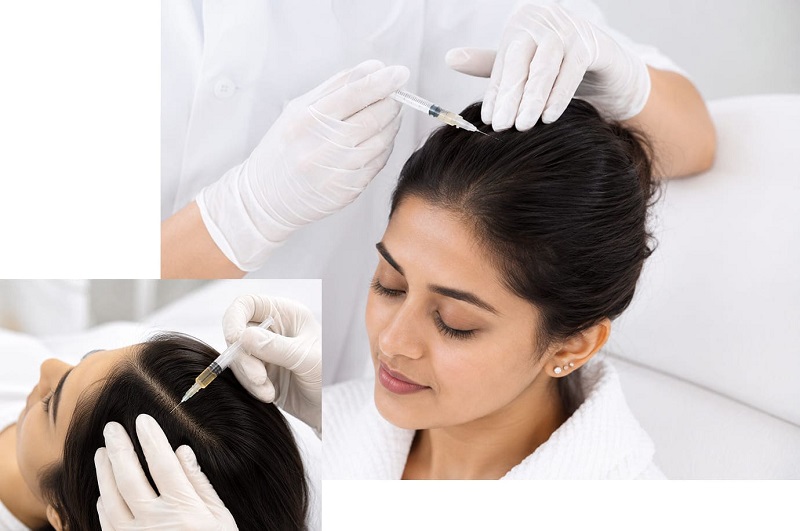
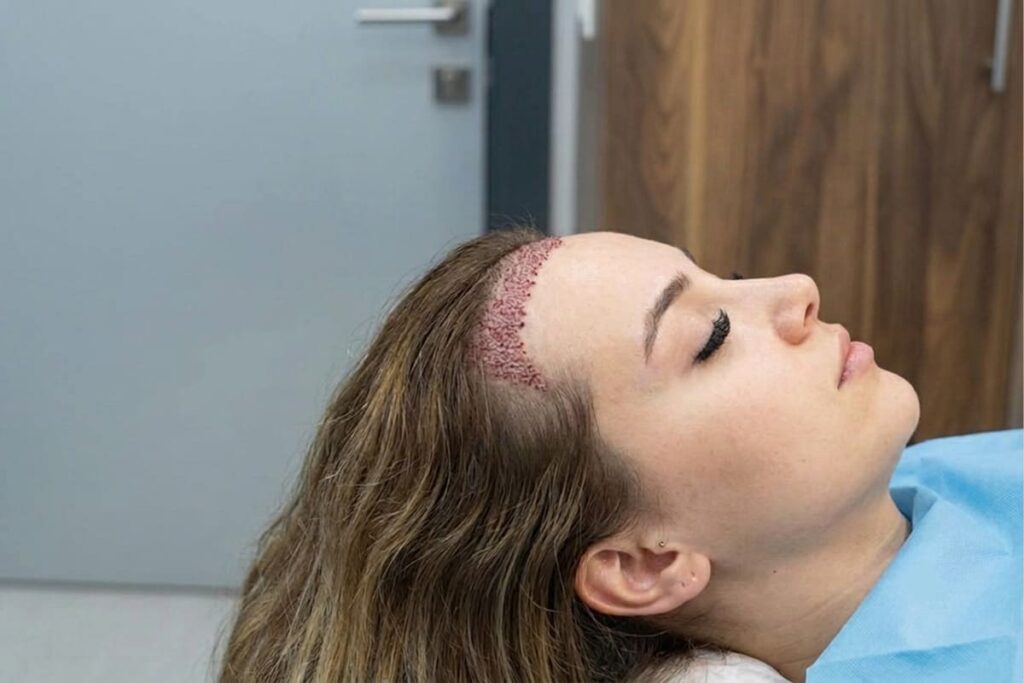
Stem cell therapy for hair loss, done through hair-follicle-derived stem cells (HFDSCs) — also known as follicular suspension therapy or HFSCS (hair follicle stem cell suspension) — works differently. It doesn’t just stimulate, it replenishes. A small number of donor hair follicles are extracted using a mini-FUE technique, similar to a hair transplant but on a much smaller scale. These follicles are then processed in the lab using enzymatic dissociation (typically with trypsin) to break them down and isolate the CD34+ and CD200+ progenitor stem cells inside them. This isolated cell suspension is then injected directly into areas with miniaturized or thinning hair.
How Hair Follicle Stem Cells Are Extracted and Processed
The general process looks like this:
1. A small number of healthy donor follicles are extracted (similar to FUE used in hair transplant procedures).
2. Follicles are washed and incubated in a trypsin solution to enzymatically separate the stem cells from the follicle structure.
3. The resulting single-cell suspension is filtered and confirmed for CD34/CD200 markers.
4. The suspension — sometimes combined with PRP as a carrier — is injected into the scalp’s thinning zones.
Stem Cell Therapy vs PRP for Hair Loss: The Real Mechanism Difference
Here’s the simplest way to understand it:
● PRP = fuel. It sends growth signals to follicles that are still functioning, encouraging them to work harder.
● Stem cell therapy = replacement cells. It delivers fresh CD34+/CD200+ progenitor cells directly to follicles that have lost the very cells needed to stay active.
Since AGA is now understood to involve a drop in progenitor cells rather than a loss of the stem cells themselves, hair follicle stem cell therapy targets the actual gap — while PRP works around it by boosting what’s still there.
Stem Cell Hair Treatment vs PRP: Comparison Table
| Factor | PRP | Stem Cell Therapy (HFDSC) |
|---|---|---|
| Source | Patient's blood | Patient's own donor hair follicles |
| Extraction | Blood draw + centrifuge | Mini-FUE extraction + enzymatic dissociation |
| Mechanism | Stimulates existing follicles | Replenishes progenitor stem cells |
| Best suited for | Early to moderate thinning | Areas of visible miniaturization |
| Sessions | Multiple, spaced over months | Fewer sessions, sometimes single-session protocols |
| Lab processing | Not required | Required (enzymatic isolation, marker confirmation) |
Who Should Choose Hair Follicle stem cell suspension therapy for Hair Loss?
Stem cell therapy for hair loss is generally considered for patients with visible miniaturization who haven’t responded fully to PRP alone, or who want to address the follicle-level cause rather than just stimulate existing growth. It tends to suit:
● Patients with moderate AGA where follicles are visibly thinner but still present, not fully closed off
● Patients who’ve plateaued on PRP or GFC and want a treatment that works on a different biological pathway
● Patients looking to preserve and thicken their existing native hair alongside or after a hair transplant
It’s not a replacement for a hair transplant in cases of complete baldness or fully closed-off follicles — stem cell therapy works on follicles that are thinning, not follicles that are gone. A consultation with a hair specialist in Pune is the right first step to know which category you fall into, since scalp examination and hair pull tests give a much clearer answer than self-diagnosis based on photos or online quizzes.
Can Stem Cell Therapy and PRP Be Combined for Hair Loss?
Yes — in some protocols, the isolated stem cell suspension is resuspended in PRP itself before injection, rather than in plain saline. This uses PRP as a nutrient-rich carrier for the stem cells, potentially combining PRP’s growth-factor signaling with the stem cells’ progenitor-replenishing effect in a single session.
What Does the Research Say?
This isn’t just theory. In a 2025 study published in Hair Transplant Forum International, patients treated with enzymatically-isolated hair follicle stem cells showed a 19% improvement in hair density and a 20% improvement in hair caliber compared to baseline, with 96% cell viability confirmed in lab testing before injection. Photographic grading also showed significant improvement across the treated group, while the untreated control group actually got worse over the same period — a reminder that AGA is progressive and tends not to improve on its own.
A separate 2023 case report in the Turkish Journal of Dermatology documented a 21 hairs/cm² density increase in one patient with grade III AGA, after a single trypsin-isolated stem cell suspension injection combined with PRP as a carrier. Flow cytometry confirmed the presence of CD34+ (9.1%) and CD200+ (4.2%) progenitor cells in the isolated sample, giving a lab-verified basis for what was actually injected — not just a clinical assumption.
That said, it’s worth being upfront about the limitations: these are still early-stage, small-sample studies (20 patients in one, a single case in the other), and the researchers themselves note that larger, multi-center, randomized trials are needed before stem cell therapy can be called a guaranteed solution for AGA. It’s a genuinely promising direction backed by real lab data, not a miracle cure — and any clinic offering it should be transparent about where the evidence currently stands.
Recovery, Downtime, and Safety
Both PRP and stem cell therapy for hair loss are outpatient, walk-in-walk-out procedures — there’s no general anesthesia and no hospital stay. With PRP, most patients feel mild scalp tenderness for a day or two, similar to a sunburn feeling, with no visible downtime. Stem cell therapy involves an extra step — the mini-FUE extraction of donor follicles — so there may be tiny, quickly-healing extraction points at the donor site in addition to mild scalp tenderness at the injection area. Because both use the patient’s own biological material (autologous), the risk of allergic reaction or rejection is low. As with any injectable scalp treatment, results depend heavily on correct patient selection, sterile lab processing, and injection technique — which is why this should only be done at a clinic with proper lab protocols for cell isolation and marker confirmation, not just a syringe and a centrifuge.
Why Choose Skin & Hair Surgery Clinic for Skin Glowing Treatments in Pune?
At Skin & Hair Surgery Clinic, we offer personalized skin glow treatments tailored to your unique skin type and concerns. Our experienced dermatologists use advanced technologies and evidence-based procedures, including HydraFacial, chemical peels, laser rejuvenation, and skin brightening treatments, to help you achieve healthy, radiant skin. With a focus on safety, natural-looking results, and patient satisfaction, we strive to deliver effective solutions for long-lasting skin glow and rejuvenation.
FAQs
Stem cell therapy can help regenerate weaker or dormant follicles, while PRP mainly strengthens follicles that are still active. The better option depends on how advanced your hair loss is.
Stem cell therapy is generally priced higher than PRP because of the additional lab processing involved. Exact pricing depends on the extent of hair loss and number of sessions needed.
Yes, some clinics combine both to strengthen active follicles with PRP while supporting weaker areas with stem cell therapy, based on a scalp assessment.
Dr. Pradeep Kumari examines scalp and follicle activity before recommending a treatment, ensuring the plan matches the patient’s actual hair loss stage rather than a generic protocol.

[…] regulated clinical trials. If you’re considering either option, it’s worth reading how stem-cell therapy compares with PRP and asking specifically about sourcing, evidence, and regulatory status before […]