
A well-defined beard has become an important part of men’s grooming and personal style. However, not everyone is naturally blessed with a thick, even beard. Patchy growth, facial scars, genetics, hormonal factors, or previous injuries can make it difficult to achieve the desired beard appearance. Fortunately, Beard Hair Transplant offers a permanent and natural-looking solution.
Using advanced hair restoration techniques, a beard hair transplant in Pune can restore facial hair density, improve beard shape, and enhance facial aesthetics. In this guide, we’ll explain everything you need to know about the beard hair transplant procedure, recovery, benefits, possible side effects, and expected results.
Schedule a consultation with our hair transplant specialist to learn if an FUE beard transplant is right for you.
What Is a Beard Hair Transplant?
A beard hair transplant is a cosmetic procedure that restores or enhances facial hair by transplanting healthy hair follicles from the back or sides of the scalp to the beard area. The transplanted follicles continue to grow naturally, providing a fuller and more defined beard.
The procedure is commonly performed using the Follicular Unit Extraction (FUE) technique, which is minimally invasive, leaves no visible linear scar, and provides natural-looking results.
Why Do Men Choose Beard Hair Transplant Surgery?
Men opt for beard hair transplant surgery for several reasons. Some have naturally sparse or patchy beard growth, while others lose facial hair due to injuries, burns, scars, or previous surgeries. Many simply wish to improve beard density or reshape their facial hair for a more balanced appearance.
A fuller beard can enhance facial symmetry, improve confidence, and offer greater flexibility in styling. Since the transplanted hair grows naturally, it can be shaved, trimmed, and maintained like normal facial hair.
Who Is an Ideal Candidate for Beard Hair Transplant?
A beard hair transplant for men is suitable for individuals who have:
● Patchy or uneven beard growth
● Thin or sparse facial hair
● Beard hair loss due to scars or injuries
● Congenital absence of beard hair
● Healthy donor hair on the scalp
● Realistic expectations regarding the outcome
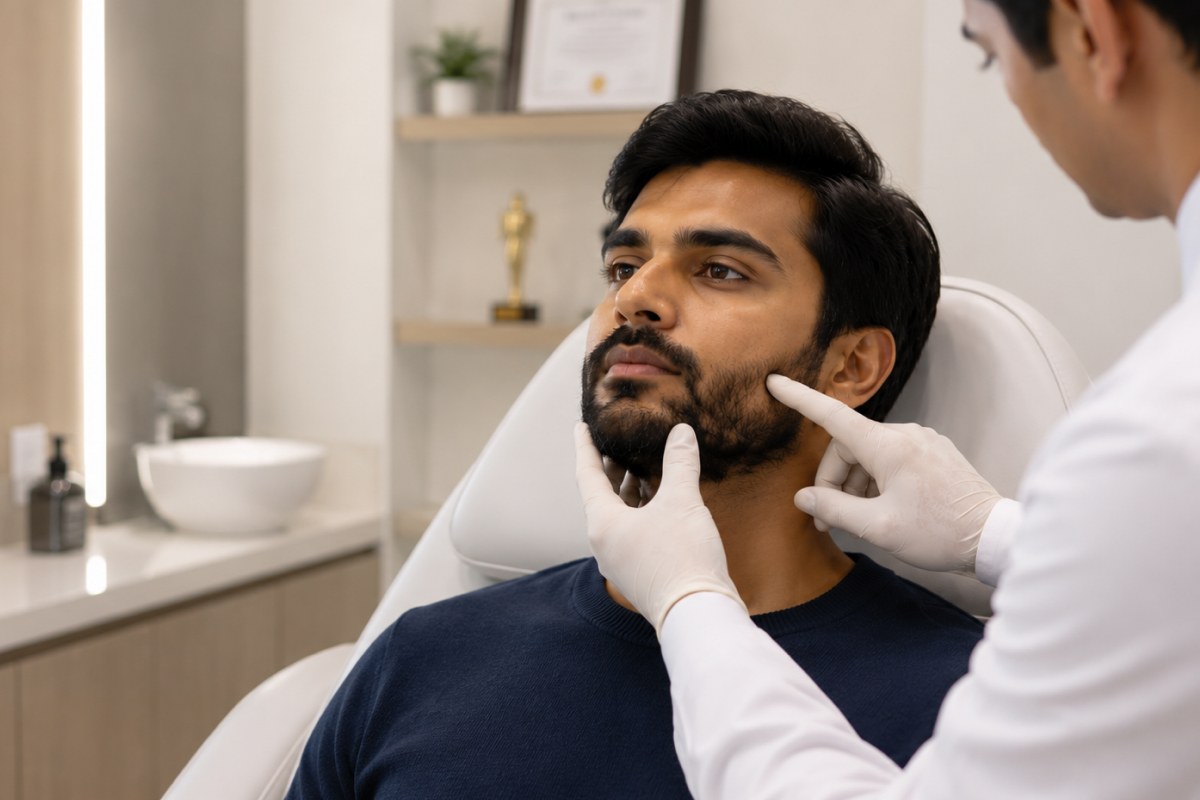
Before the procedure, a hair transplant specialist evaluates your beard pattern, skin condition, and donor area to determine whether you’re a suitable candidate.
How Does Beard Hair Transplant Work?
Many people ask, how does a beard transplant work?
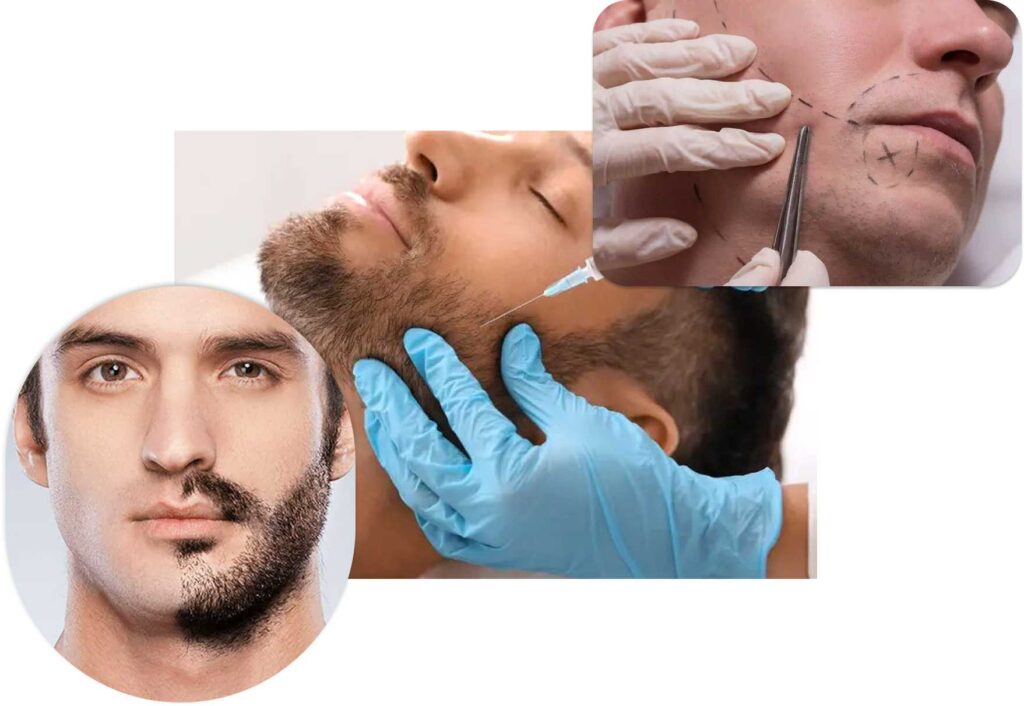
The procedure involves harvesting healthy hair follicles from the donor area, usually the back of the scalp. These follicles are then carefully implanted into the beard region following the natural angle, direction, and density of facial hair.
Each graft is strategically placed to ensure the beard appears natural and blends seamlessly with existing facial hair. Since the transplanted follicles retain their original characteristics, they continue growing permanently.
Choosing the Right Beard Style for Your Face Shape
| Face Shape | Recommended Beard Style |
|---|---|
| Oval | Full Beard, Short Boxed Beard |
| Round | Goatee, Extended Goatee, Long Beard |
| Square | Circle Beard, Rounded Full Beard |
| Rectangle | Short Beard with Fuller Sides |
| Diamond | Chin Strap with Mustache |
| Heart | Balbo Beard, Light Stubble |
Different Beard Shapes That Can Be Created
Examples
● Full Beard
● Short Boxed Beard
● Balbo Beard
● Anchor Beard
● Circle Beard
● Van Dyke
● Goatee
● Hollywoodian
● Viking Beard
● Corporate Beard
Types of Beard Hair Transplant
There are different techniques used for beard hair transplantation. The right method depends on your facial hair goals, donor hair quality, and the surgeon’s recommendation.
1. Follicular Unit Extraction (FUE) Beard Hair Transplant (Most Common)
FUE is the most widely used and advanced beard transplant technique. Individual hair follicles are extracted from the back or sides of the scalp and implanted into the beard area to create a natural-looking beard.
Benefits:
● Minimally invasive procedure
● No visible linear scar
● Faster recovery
● Natural-looking results
● Ideal for patchy beard restoration and full beard reconstruction
Best for: Most patients seeking beard restoration.
2. Follicular Unit Transplantation (FUT) Beard Hair Transplant
In the FUT technique, a thin strip of scalp is removed from the donor area. Hair follicles are then separated under a microscope and transplanted into the beard region.
Benefits:
● Can provide a large number of grafts in one session
● Suitable for extensive beard reconstruction
Limitations:
● Leaves a linear scar on the donor area
● Longer recovery compared to FUE
● Less commonly used today
3. Beard Reconstruction for Scar Coverage
This specialized beard transplant is performed to restore facial hair over scars caused by burns, injuries, acne, or previous surgeries. Hair follicles are carefully implanted into scar tissue to improve beard density and conceal visible marks.
Best for:
● Burn scars
● Surgical scars
● Injury scars
● Acne scars
4. Partial Beard Hair Transplant
Not everyone requires a full beard transplant. Some men choose to restore or enhance specific areas of the face.
Common treatment areas include:
● Mustache enhancement
● Goatee restoration
● Sideburn reconstruction
● Cheek beard filling
● Jawline definition
● Patchy beard correction
This option requires fewer grafts and offers a shorter procedure time.
Beard Hair Transplant Procedure: Step-by-Step
The beard hair transplant procedure generally includes the following steps:
Step 1: Consultation and Beard Design
The surgeon evaluates facial features and beard density and discusses the patient’s desired beard style.
Step 2: Donor Hair Extraction
Healthy hair follicles are extracted using the FUE technique under local anesthesia.
Step 3: Recipient Site Preparation
Tiny micro-incisions are created in the beard area while maintaining the natural direction of beard growth.
Step 4: Graft Implantation
Each follicle is implanted carefully to achieve uniform density and a natural appearance.
Step 5: Post-Procedure Care
Patients receive detailed instructions on cleaning, medications, and activity restrictions to promote optimal healing.
The procedure usually takes several hours, depending on the number of grafts required.
Benefits of Permanent Beard Hair Transplant
A permanent beard hair transplant offers several long-term advantages:
● Natural-looking beard growth
● Permanent results
● Improved beard density
● Better facial aesthetics
● Customised beard shape and design
● Minimal downtime with FUE technique
● Ability to trim and shave normally after complete healing
Because the transplanted hair behaves like natural beard hair, patients enjoy long-lasting results without frequent maintenance.
Beard Hair Transplant Recovery Timeline
Proper beard hair transplant recovery is essential for achieving the best results.
● Mild redness and swelling usually subside within a few days.
● Tiny scabs naturally fall off within 7–10 days.
● Temporary shedding of transplanted hair is normal during the first few weeks.
● New beard growth generally begins after three to four months.
● Significant improvement is seen by six months.
● Final results are typically visible within 9–12 months.
Following your surgeon’s aftercare instructions helps ensure smooth healing and healthy graft survival.
Beard Transplant Before and After: What Results Can You Expect?
One of the biggest advantages of a beard transplant is its natural appearance. Beard transplant before-and-after results often show noticeable improvements in beard density, symmetry, and facial definition.
The transplanted hair grows just like natural beard hair, allowing you to shave, trim, and style it according to your preferences. Final results develop gradually, giving the beard a completely natural look over time.
Beard Transplant Side Effects and Risks
Like any medical procedure, there are some possible beard transplant side effects, although they are generally mild and temporary.
These may include:
● Mild redness
● Swelling
● Small scabs
● Temporary itching
● Minor discomfort
● Temporary shedding of transplanted hair
Serious complications are uncommon when the procedure is performed by an experienced hair transplant specialist and proper aftercare is followed.
Beard Transplant Cost: Factors That Influence Pricing
Many patients inquire about beard transplant costs, but the overall expense varies depending on several factors rather than a fixed price.
These include:
● Number of grafts required
● Size of the treatment area
● Beard design complexity
● Surgeon’s expertise
● Technology used
● Clinic facilities
● Individual treatment requirements
During your consultation, the specialist will assess your condition and provide a personalized treatment plan along with a detailed cost estimate.
Why Choose Skin & Hair Surgery Clinic for Beard Hair Transplant?
If you’re considering a beard hair transplant in Pune, choosing an experienced team is essential for achieving natural and long-lasting results.
At Skin & Hair Surgery Clinic, every treatment begins with a detailed consultation and personalized beard design. Our experienced specialists use advanced FUE technology, precise graft placement, and evidence-based techniques to ensure optimal density and natural beard growth. From consultation to recovery, patients receive comprehensive guidance and dedicated post-procedure care for the best possible outcome.
Why Choose Skin & Hair Surgery Clinic for Skin Glowing Treatments in Pune?
At Skin & Hair Surgery Clinic, we offer personalized skin glow treatments tailored to your unique skin type and concerns. Our experienced dermatologists use advanced technologies and evidence-based procedures, including HydraFacial, chemical peels, laser rejuvenation, and skin brightening treatments, to help you achieve healthy, radiant skin. With a focus on safety, natural-looking results, and patient satisfaction, we strive to deliver effective solutions for long-lasting skin glow and rejuvenation.
Conclusion
A beard hair transplant is an effective solution for men who wish to achieve a fuller, denser, and well-shaped beard. Whether you’re dealing with patchy facial hair, beard scars, or naturally sparse growth, the procedure provides permanent, natural-looking results that enhance both appearance and confidence.
Ready to achieve a fuller, natural-looking beard?
Book a consultation with the experts at Skin & Hair Surgery Clinic and discover the right beard hair transplant solution tailored to your needs.
FAQs
A beard hair transplant is a cosmetic procedure that transfers healthy hair follicles from the back or sides of the scalp to the beard area. It helps restore facial hair in patchy or sparse areas, creating a fuller, natural-looking beard with permanent results.
During the procedure, healthy hair follicles are extracted using the FUE technique and carefully implanted into the beard area, following the natural direction and angle of beard growth. Dr. Pradeep Kumari performs a detailed assessment to create a personalized beard design that delivers natural-looking and long-lasting results.
Yes. A beard hair transplant is considered a permanent solution because the transplanted hair follicles continue to grow naturally in their new location. Once fully healed, the beard can be trimmed, shaved, and styled just like natural facial hair.
Most patients recover within 7 to 14 days. Mild redness, swelling, and tiny scabs usually subside within the first week, while new beard growth begins after 3 to 4 months. Final results are typically visible within 9 to 12 months.
Temporary redness, swelling, itching, mild discomfort, and small scabs are common after the procedure and usually resolve within a few days. According to Dr. Pradeep Kumari, following the recommended aftercare instructions significantly reduces the risk of complications and supports optimal healing.
Men with patchy beard growth, thin facial hair, beard scars, or uneven beard density who have a healthy donor area on the scalp are generally good candidates. A consultation with a qualified hair transplant specialist is essential to determine suitability for the procedure.
Skin & Hair Surgery Clinic offers advanced FUE beard hair transplant procedures tailored to each patient’s facial features and beard goals. Dr. Pradeep Kumari focuses on precise graft placement, natural beard design, and comprehensive post-procedure care to help patients achieve dense, natural-looking, and long-lasting beard growth.