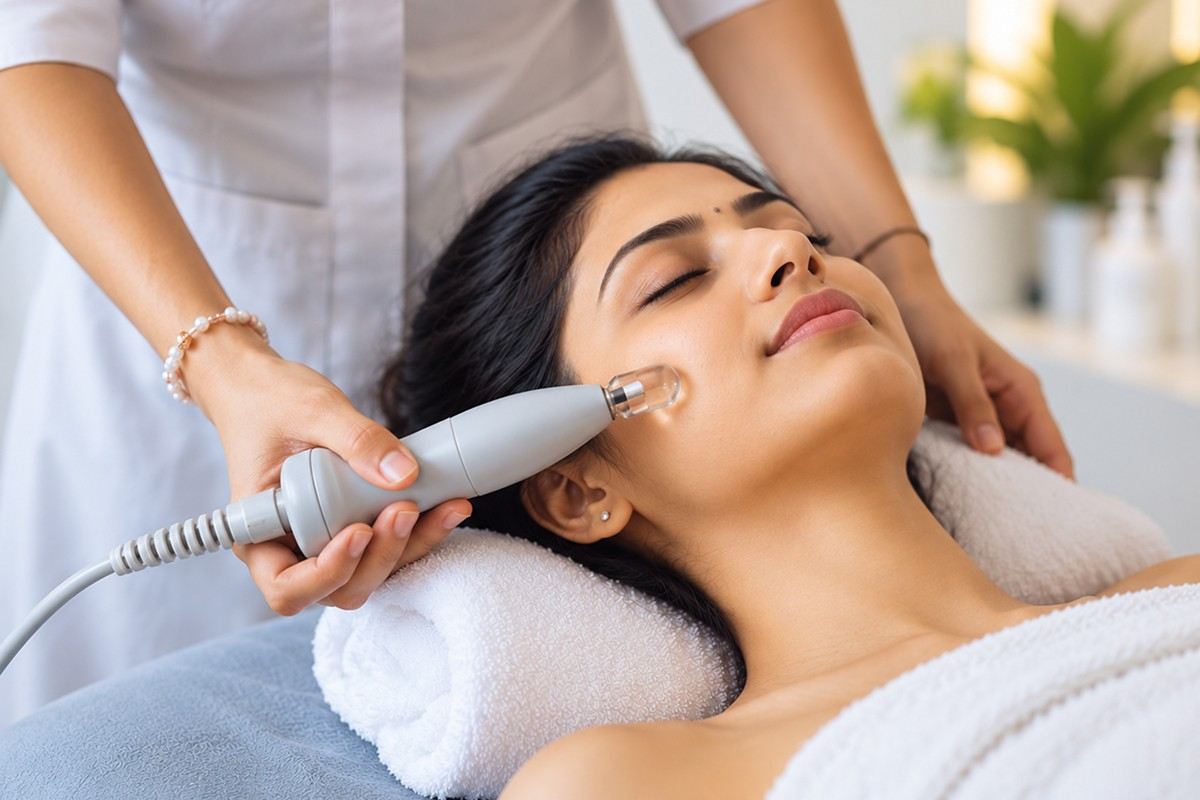

If your skin feels less firm than it used to – a softer jawline, a bit of looseness along the neck, or fine lines that weren’t there a few years ago – you’re probably not looking for surgery. You’re looking for options. HIFU, RF, laser, and RF microneedling are the four non-surgical skin tightening treatments patients ask about most, and each one works a little differently. This guide breaks down what each treatment actually does, which skin concerns they suit best, and how a dermatologist decides what’s right for you.
What Is Skin Tightening and Why Does Skin Become Loose?
Skin loses firmness as collagen and elastin – the proteins that keep it plump and structured – naturally decline with age. Sun exposure, weight fluctuations, and lifestyle factors can speed this up. The result is skin that looks less defined along the jaw, neck and cheeks, sometimes years before deeper wrinkles appear. Non-surgical skin tightening treatments work by heating the skin’s deeper layers to trigger new collagen production, gradually improving firmness without cutting or removing skin.
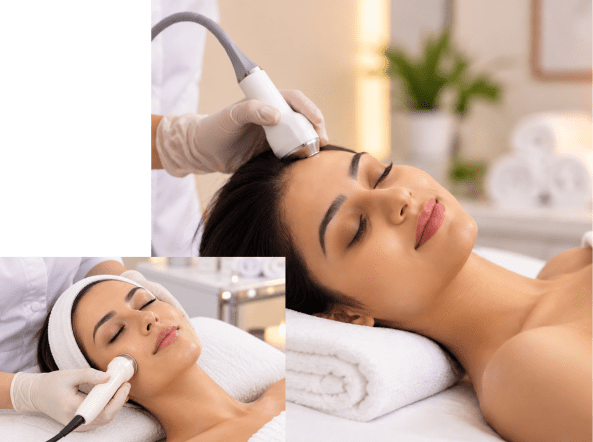
Types of Non-Surgical Skin Tightening Treatments
HIFU Skin Tightening HIFU (High-Intensity Focused Ultrasound) delivers focused ultrasound energy to the SMAS layer – the same structural layer addressed in a surgical facelift – without any incision. It’s generally considered for more visible sagging and jawline or neck definition, with results that build gradually over two to three months.
Radiofrequency (RF) Skin Tightening RF energy heats the skin’s dermis at a comparatively lower temperature than HIFU, working closer to the surface. It’s often considered for mild-to-moderate laxity, overall skin quality, and gradual firming, and typically needs a course of sessions rather than one visit.
Laser Skin Tightening Laser-based treatments primarily address surface concerns – texture, fine lines, mild pigmentation – while offering a mild tightening effect. They’re usually considered when skin texture and tone are part of the concern, alongside firmness.
RF Microneedling for Skin Tightening This combines fine microneedles with RF energy delivered directly into the dermis at a controlled depth. It’s often considered for skin tightening alongside acne scars, enlarged pores or uneven texture, since the depth of energy delivery can be adjusted.
Skin Tightening / Lifting with Threads Thread lifts use fine, dissolvable PDO or PLA threads inserted under the skin to mechanically lift sagging tissue while also stimulating collagen production around the thread as it dissolves. Unlike HIFU, RF or laser, this is a minor procedure rather than a purely non-surgical treatment, and it’s generally considered when a patient wants a more visible, immediate lift — particularly along the jawline or cheeks — alongside the gradual collagen response.
Skin Tightening with Fractional CO2 (Resurfacing) Fractional CO2 resurfacing uses an ablative laser to create controlled micro-columns of injury in the skin, prompting both resurfacing and deeper collagen remodelling. It’s often considered when skin laxity is combined with texture concerns, fine lines or scarring, since it addresses tightening and surface quality together, though it involves more downtime than RF or HIFU.
Important Read: Non-Surgical Mid Face Lift explains how energy-based lifting compares with a surgical facelift.
Not sure which of these fits your skin?
A dermatologist can assess your degree of skin laxity, skin type and treatment goals in person before recommending an approach – our team offers this as part of a skin tightening consultation in Pune.
HIFU vs RF vs Laser: Skin Tightening Treatments Compared
| Treatment | Best for | How it works | Treatment depth | Sessions | Downtime | Results |
| HIFU | Noticeable sagging, jawline/neck lift | Focused ultrasound heats the SMAS layer | Deep (structural layer) | Often 1, sometimes repeated annually | Minimal to none | Builds over 2–3 months, may last 12–18 months |
| RF | Mild-moderate laxity, skin quality | RF energy heats the dermis | Mid-depth | Usually a course of sessions | None | Gradual, over several weeks per course |
| Laser | Texture, fine lines, mild tightening | Light energy resurfaces/stimulates dermis | Surface to mid-depth | Course of sessions | Minimal, varies by laser type | Gradual improvement in tone and texture |
| RF Microneedling | Texture, acne scars, tightening combined | Microneedles deliver RF at adjustable depth | Adjustable (shallow to mid) | Course of sessions | Mild redness for 1–2 days | Gradual, over weeks to months |
No single treatment on this list is universally “the best.” The right one depends on how much laxity you have, which area you’re treating, your skin type, and what else you’re hoping to improve alongside firmness.
Which Skin Tightening Treatment Suits Your Skin Concern?
Mild skin laxity or early prevention: RF or laser-based treatments are often considered first, since they work gradually and gently on early changes.
Moderate sagging, especially jawline or cheeks: HIFU is more often discussed here, since it reaches the deeper structural layer.
Skin tightening around the eyes: The skin here is thinner and more delicate, so gentler energy-based options such as low-intensity RF or laser are more commonly considered, while thread lifts and fractional CO2 are generally reserved for other areas of the face given the downtime and depth involved.
Skin tightening in the lower face (jowls, lower cheeks, jawline): HIFU is often discussed for its lift along the jawline, and a thread lift may be considered when a more visible, immediate lift is the goal alongside gradual collagen support.
Skin tightening in the neck: HIFU, RF or a thread lift may be considered depending on the degree of laxity, sometimes alongside a dedicated neck lift evaluation if sagging is more advanced.
Fine lines and poor texture: Laser, RF microneedling or fractional CO2 resurfacing tend to address both tightening and surface quality together, with CO2 generally considered for more pronounced texture or scarring given the extra downtime.
Enlarged pores or acne scars with some laxity: RF microneedling is often discussed, and may be combined with dedicated acne scar treatment planning.
Age-related changes across the face: A combination approach — for example RF sessions alongside periodic HIFU, or a thread lift combined with skin resurfacing — may be considered after assessment, sometimes alongside broader anti-ageing treatment planning.
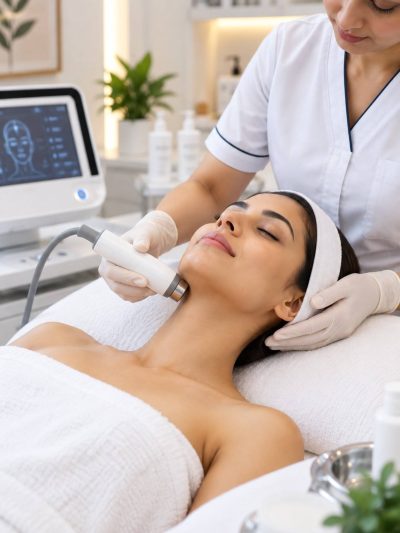
How to Choose the Right Skin Tightening Treatment
There isn’t a single formula, but a dermatologist typically weighs:
- – Degree of skin laxity (mild, moderate or advanced)
- – Skin type and tone, including pigmentation tendency
- – Age and treatment area (face, neck or both)
- – Skin texture and any coexisting concerns like acne scars
- – Medical history and realistic expectations for the outcome
If sagging is advanced, non-surgical treatment alone may not achieve the desired result, and a surgical option such as a thread lift or facelift may be discussed as an alternative.
Are Skin Tightening Treatments Safe?
HIFU, RF, laser and RF microneedling are generally well-tolerated when performed by a qualified dermatologist using appropriate settings for your skin type. For Indian and other melanin-rich skin tones, device selection and energy settings matter more than for lighter skin, since incorrect settings can increase the risk of post-treatment pigmentation changes. This is why a professional assessment – rather than a walk-in, one-size-fits-all approach – is recommended before starting treatment. No non-surgical treatment offers guaranteed or permanent results; outcomes vary by individual and typically require occasional maintenance.
When Should You See a Dermatologist for Skin Tightening?
A consultation is worth booking if you’re noticing early sagging and want to understand your options before they become more advanced, if you’re unsure whether HIFU, RF or laser suits your concern, or if you’ve tried at-home devices without visible change. A dermatologist in Pune can also tell you honestly when non-surgical treatment isn’t likely to be enough, which is just as important as knowing when it will help.
Why Choose Skin & Hair Surgery Clinic for Skin Glowing Treatments in Pune?
At Skin & Hair Surgery Clinic, we offer personalized skin glow treatments tailored to your unique skin type and concerns. Our experienced dermatologists use advanced technologies and evidence-based procedures, including HydraFacial, chemical peels, laser rejuvenation, and skin brightening treatments, to help you achieve healthy, radiant skin. With a focus on safety, natural-looking results, and patient satisfaction, we strive to deliver effective solutions for long-lasting skin glow and rejuvenation.
FAQs
There’s no single treatment that’s best for everyone. HIFU, RF, laser and RF microneedling target different skin concerns and depths, so the right option depends on your degree of laxity, skin type and treatment goals.
HIFU generally reaches deeper (the SMAS layer) and is considered for more visible sagging, while RF works closer to the surface and suits milder laxity. Neither is universally “better” – it depends on your concern.
Results from HIFU and RF typically build gradually and can last from several months to around a year or more, depending on the treatment, your skin’s response and lifestyle factors. Periodic maintenance sessions are often recommended.
HIFU is sometimes done as a single session, while RF, laser and RF microneedling usually involve a short course of sessions. Your dermatologist will confirm the number based on assessment.
Most patients describe a warming or mild tingling sensation rather than significant pain, and numbing cream can be used for comfort during certain treatments.
Non-surgical treatments can noticeably improve mild-to-moderate laxity, but they do not remove excess skin the way a surgical facelift does. For advanced sagging, a facelift or thread lift may be discussed as a more suitable option.
Yes, when performed by an experienced dermatologist using settings suited to your skin type, though pigmentation risk needs to be considered and managed carefully in melanin-rich skin.
Not quite. A thread lift is a minor procedure that uses dissolvable threads to mechanically lift tissue, alongside a collagen-stimulating effect, whereas HIFU, RF and laser are fully non-surgical. It’s generally considered when a more visible lift is the goal, after assessment.
Fractional CO2 resurfacing combines skin tightening with resurfacing, and is often considered for skin laxity that’s combined with texture concerns, fine lines or scarring, though it involves more downtime than RF or HIFU.
The skin around the eyes is delicate, so this area needs a gentler, more carefully calibrated approach. It’s usually discussed separately from other facial zones, and a dermatologist will confirm whether an energy-based treatment is suitable for you.
Conclusion
Choosing between HIFU, RF, laser and RF microneedling isn’t about finding the single “best” treatment – it’s about matching the right technology to your specific skin concern, laxity level and skin type. A proper assessment is the only way to know which approach will genuinely help.
If you’re exploring skin tightening treatment in Pune, our dermatologists can evaluate your skin and walk you through realistic options during a consultation.
Book an appointment to get started.